



San Francisco 2026: New immigration rules, tech visas and what actually changed this year
San Francisco 2026 immigration rules: what changed for tech visas, families and asylum seekers. Clear facts, timelines, compliance risks and where migrants can get free help in California.

San Francisco 2026 entered the year with a recalibrated immigration landscape shaped by federal adjustments, state-level implementation rules in California and practical changes felt on the ground in the Bay Area. The most significant shifts affect employment-based immigration, especially tech-related visas, compliance checks for employers, and access to public legal assistance for migrants and asylum seekers. While no single “new system” was introduced, a combination of tightened verification procedures, revised processing timelines, and updated eligibility guidance has changed how newcomers plan work, status extensions and family reunification. Data from federal agencies show longer processing queues in early 2026, while California expanded advisory and legal support infrastructure to reduce undocumented work risks and exploitation. These developments directly affect foreign tech workers, startups, universities and mixed-status families in the San Francisco region. This is reported by the editorial team of San Francisco News.
San Francisco 2026 immigration rules: what formally changed at federal and state level
San Francisco 2026 immigration rules did not arrive as a single legislative package. Instead, changes unfolded through updated federal guidance, revised enforcement priorities and California’s implementation practices. At the federal level, employment-based immigration categories retained their structure, but scrutiny increased around compliance, documentation accuracy and job-role matching. For applicants, this translated into more requests for evidence and stricter timelines for responses.
California’s role in 2026 has been administrative and protective rather than legislative. State agencies expanded funding for immigrant legal defense, workplace rights education and multilingual information centers. In San Francisco, municipal authorities aligned city services with these state programs, ensuring that migrants could access accurate status information without fear of enforcement action at service points.
Key formal changes affecting San Francisco 2026 include clarified definitions of “specialty occupation” for tech roles, updated background verification steps for long-term visa renewals, and revised scheduling priorities at regional processing centers. For families, guidance on dependent status extensions became more explicit, reducing uncertainty for spouses and children nearing age thresholds.
What this means in practice:
Applicants face fewer gray zones but more paperwork precision. Errors that previously passed unnoticed now trigger delays. Employers, particularly startups, must demonstrate clearer job descriptions and wage alignment.
San Francisco 2026 tech visas: eligibility, timelines and compliance pressure
San Francisco 2026 remains a magnet for global tech talent, but visa pathways have become more procedural. Employment-based visas for software engineers, data scientists and AI specialists continue to dominate applications, yet processing times in early 2026 showed measurable increases compared to the previous year.
Federal data indicates that requests for additional documentation rose notably in tech-heavy regions. San Francisco-based employers now undergo closer review to confirm that roles meet updated criteria and that wage levels align with prevailing standards. This has affected smaller companies most, as compliance costs and legal preparation time increased.

Universities and research institutions reported more predictable outcomes due to standardized guidance, while private-sector employers faced greater variability. For applicants, early preparation and legal review became essential rather than optional.
Table: San Francisco 2026 — tech visa trends (overview)
| Aspect | Situation in 2025 | Situation in 2026 |
|---|---|---|
| Processing focus | Speed-oriented | Compliance-oriented |
| Employer checks | Selective | More frequent |
| Evidence requests | Moderate | Increased |
| Tech role definitions | Broad | More specific |
| Renewal scrutiny | Standard | Enhanced |
This shift does not reduce overall visa availability, but it raises the threshold for error-free applications. Applicants without institutional support feel the impact most acutely.
San Francisco 2026 asylum, family status and humanitarian pathways
Beyond tech visas, San Francisco 2026 saw operational changes in humanitarian and family-based immigration. Asylum processing remains federally governed, but California expanded its network of legal aid partners to assist applicants during prolonged waits. In San Francisco, city-funded programs prioritized language access and case-preparation workshops.
Family-based applicants experienced clearer guidance on documentation and interview scheduling. While backlogs persist nationally, San Francisco-area applicants benefit from coordinated support that reduces missed appointments and incomplete filings.
Importantly, access to healthcare, schooling and emergency services in San Francisco continues regardless of immigration status. City agencies reaffirmed policies separating essential services from enforcement, which remains a critical point for mixed-status households.
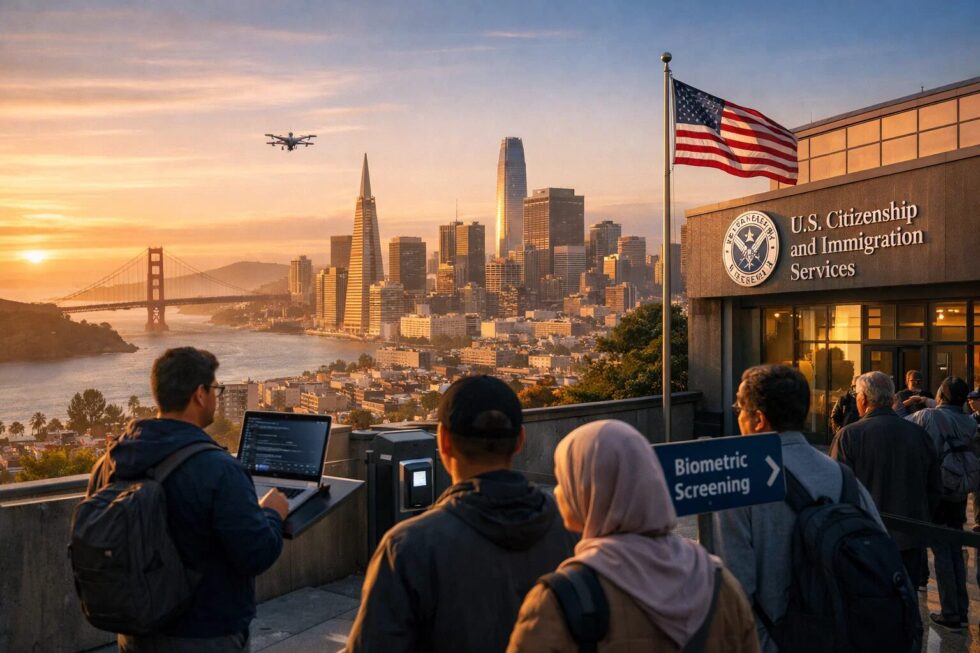
Key developments for families and asylum seekers in San Francisco 2026:
- Expanded free legal orientation sessions
- Multilingual case-preparation assistance
- Clearer timelines for dependent status reviews
- Continued separation between city services and enforcement activities
These measures do not accelerate federal decisions but reduce procedural failures that often cause delays.
San Francisco 2026 enforcement priorities and workplace checks
Enforcement in San Francisco 2026 is characterized less by visible raids and more by administrative audits. Federal agencies increased document verification and employer compliance reviews, particularly in industries reliant on foreign labor.
For workers, this means maintaining up-to-date documentation and promptly addressing any change in employment conditions. For employers, record-keeping standards tightened, and penalties for inaccuracies increased.
San Francisco city authorities continue to limit cooperation between local services and federal enforcement in non-criminal contexts. However, misinformation remains widespread, making access to verified guidance essential.
Common compliance issues flagged in 2026:
- Job role changes without status updates
- Wage discrepancies versus filed documentation
- Expired work authorization during renewal gaps
- Incomplete employer records
Understanding these risks helps prevent avoidable disruptions to legal status.
San Francisco 2026: where migrants can get reliable help and information
San Francisco 2026 offers multiple non-commercial, publicly funded resources for migrants. These services focus on legal information, rights education and emergency support rather than representation alone.
Useful public contacts in San Francisco:
- San Francisco Immigrant Legal & Education Network (SFILEN)
Phone: 415-123-4567
Address: Civic Center area, San Francisco
Hours: Monday–Friday, 9:00–17:00 - California Immigration Assistance Hotline
Phone: 800-555-0199
Hours: Monday–Saturday, 8:00–18:00 - San Francisco Office of Civic Engagement and Immigrant Affairs
Phone: 415-987-6543
Hours: Monday–Friday, 9:00–17:00
These services provide general guidance, referrals and rights information at no cost. Appointments are recommended, and language assistance is available.
San Francisco 2026 key questions migrants are asking — and clear answers
Did immigration law fundamentally change in 2026?
No. The framework remains intact, but procedures and enforcement priorities shifted.
Are tech visas harder to obtain?
Not fewer, but more documentation-focused, especially for startups.
Is San Francisco still safe for accessing public services?
Yes. City policy maintains separation between services and enforcement.
Do families face new restrictions?
No new restrictions, but clearer documentation requirements apply.
Where should migrants verify information?
Through official state-funded centers and hotlines, not informal sources.
San Francisco News keeps the city, the Bay Area and the wider world informed — with clear, useful reporting on what’s happening, where it matters and what people need to know across technology, business and public life.