



San Francisco 2026 visas: H-1B, O-1, startup visas and legal pathways to California
San Francisco 2026 visas overview: H-1B, O-1 and startup options, eligibility rules, timelines, quotas and legal pathways to move to California in 2026.
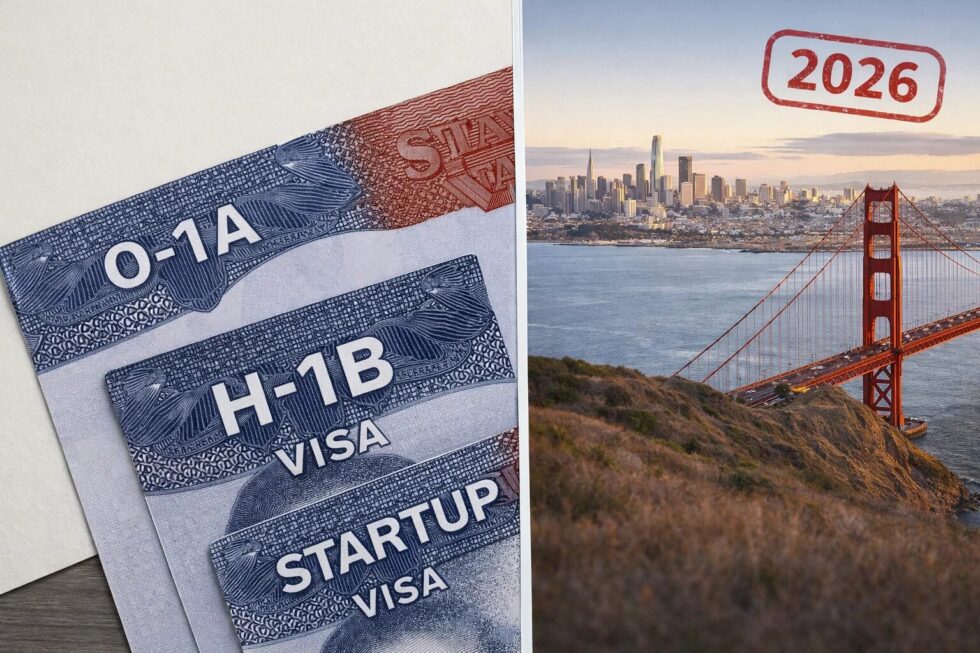
San Francisco 2026 visas remain a central issue for professionals, founders and skilled workers seeking legal relocation to California amid tighter immigration controls, high demand for work permits and ongoing federal scrutiny of employment-based migration. In 2026, the United States continues to rely on structured visa programmes — including H-1B, O-1 and founder-linked startup pathways — while reinforcing compliance, wage transparency and employer accountability. Federal data show sustained oversubscription of H-1B quotas, increased requests for evidence (RFEs) across skilled visas, and heightened attention to lawful status transitions for foreign nationals already present in the country. Against this backdrop, San Francisco remains one of the most competitive entry points, driven by technology, artificial intelligence, biotech and venture capital activity. This article outlines how the visa landscape operates in 2026, what has changed, who qualifies, and which legal routes remain available.
This is reported by the San Francisco News editorial team.
San Francisco 2026 visas: how the system works and what changed
The San Francisco 2026 visas framework is governed by federal immigration law but shaped in practice by regional labour demand, salary benchmarks and compliance enforcement. California, and particularly the Bay Area, continues to account for a disproportionate share of employment-based petitions, especially in technology and research sectors.
In 2026, several structural realities define the system. First, annual numerical caps remain in place for most employment visas, notably the H-1B programme, which is limited to 85,000 new approvals per fiscal year, including the advanced-degree exemption. Second, adjudication standards have tightened, with immigration authorities placing greater emphasis on job specificity, employer-employee relationships and documentary evidence of specialised expertise.
At the same time, premium processing timelines have stabilised for certain categories, offering faster decisions for eligible applicants, while background screening and status maintenance checks have expanded. For applicants targeting San Francisco, this means that visa selection, documentation quality and timing are decisive factors in 2026.
San Francisco 2026 visas and the H-1B programme: rules, quotas and salaries
The H-1B visa remains the most widely used pathway for skilled foreign professionals entering the San Francisco labour market. It allows US employers to sponsor workers in specialty occupations requiring theoretical or technical expertise.
Key facts for 2026:
- Annual cap: 65,000 regular slots plus 20,000 for US master’s degree holders
- Selection method: Electronic registration and lottery system
- Typical fields: Software engineering, data science, AI research, biotech, finance
- Initial duration: Up to three years, extendable to six
In San Francisco, prevailing wage levels are among the highest in the country, reflecting local cost-of-living benchmarks. Employers must demonstrate compliance with wage requirements and prove that the position qualifies as a specialty occupation.
Processing patterns in 2026 show continued high demand, with lottery selection rates remaining competitive. Workers already in the US often rely on status changes or cap-exempt employers, such as universities and nonprofit research institutions, to avoid annual quota limits.
H-1B overview for San Francisco 2026
| Category | Detail |
|---|---|
| Visa cap | 85,000 annually |
| Salary basis | Local prevailing wage |
| Processing time | Several months standard |
| Employer obligation | Wage and role compliance |
| Portability | Limited but possible |
The programme continues to be closely monitored, with audits and compliance reviews affecting employers operating in California.
San Francisco 2026 visas and the O-1 option for extraordinary ability
The O-1 visa has gained visibility in San Francisco due to its flexibility and exemption from annual caps. Designed for individuals with extraordinary ability in sciences, arts, education, business or athletics, the O-1 is increasingly used by senior engineers, founders, researchers and creative professionals.
To qualify, applicants must demonstrate sustained national or international recognition through awards, publications, critical roles or media coverage. In 2026, adjudicators focus heavily on the quality and relevance of evidence rather than volume alone.
The O-1 does not require a traditional employer-employee relationship, but a US agent or sponsoring entity must be involved. This makes it attractive to consultants, startup founders and professionals with project-based work in San Francisco.
O-1 eligibility highlights:
- Documented achievements and recognition
- Expert reference letters
- Proof of ongoing work in the US
- Clear contractual or agent arrangement
While approval rates remain strong for well-prepared cases, requests for additional evidence are common, making professional documentation essential.
San Francisco 2026 visas for founders: startup and investment pathways
Although the US does not offer a single, formal “startup visa,” several San Francisco 2026 visas routes allow founders to relocate legally if specific criteria are met. These include the International Entrepreneur Parole (IEP) framework, investor-linked visas and employment-based structures tied to founder roles.
The IEP programme allows qualifying entrepreneurs to enter the US if their startup demonstrates significant public benefit, including substantial US investment or government grants. In practice, this pathway requires careful legal structuring and ongoing reporting.
Alternative options include:
- Employment visas through a US entity with independent governance
- O-1 visas for founders with recognised expertise
- Investor-linked visas for those meeting capital thresholds
Founders targeting San Francisco must also address corporate compliance, payroll structures and role definition to align immigration and business law requirements.

San Francisco 2026 visas: practical considerations and compliance
Relocating to California under any visa category requires strict adherence to status conditions. In 2026, enforcement focuses on:
- Maintaining authorised employment
- Timely extensions and amendments
- Accurate reporting of role or salary changes
Failure to comply can result in loss of status or future inadmissibility. Applicants are advised to track expiration dates, employer changes and travel limitations carefully.
Common compliance points:
- Notify authorities of material job changes
- Avoid unauthorised work or gaps in status
- Keep copies of all filings and approvals
San Francisco employers are also subject to local and federal labour audits, making transparency essential.
San Francisco 2026 visas: where to get official help and information
Individuals seeking reliable guidance should rely on official, non-commercial resources. In San Francisco, free and government-supported services include immigrant assistance centres and legal aid organisations.
San Francisco Immigrant Legal Defense Collaborative (SFILDC)
Address: 870 Market Street, San Francisco, CA
Hours: Monday–Friday, 9:00–17:00
USCIS Contact Center
Phone: 800-375-5283
Hours: Weekdays during federal business hours
California Office of New Americans
Provides multilingual guidance on lawful status, workers’ rights and immigration procedures.
These services offer general information, referrals and updates on immigration rules without advertising or paid placement.
San Francisco 2026 visas: key questions and clear answers
Who can apply for San Francisco 2026 visas?
Professionals, researchers, founders and skilled workers meeting federal eligibility criteria.
Are quotas expected to increase in 2026?
No official expansion has been announced for capped programmes.
Can founders move without a traditional employer?
Yes, under specific structures such as O-1 or entrepreneur-linked pathways.
Is San Francisco harder than other US cities?
Demand is higher, but legal standards are federal and uniform.
Where should applicants verify updates?
Official US government immigration portals and recognised legal aid organisations.
San Francisco News keeps the city, the Bay Area and the wider world informed — with clear, useful reporting on what’s happening, where it matters and what people need to know across technology, business and public life.