



A$AP Rocky: Don’t Be Dumb review – a long-awaited return with energy, flaws and ambition
A$AP Rocky Don’t Be Dumb review 2026: detailed analysis of the new album, track highlights, guest features, lyrical strengths and weaknesses, production choices and how the record fits into Rocky’s career.
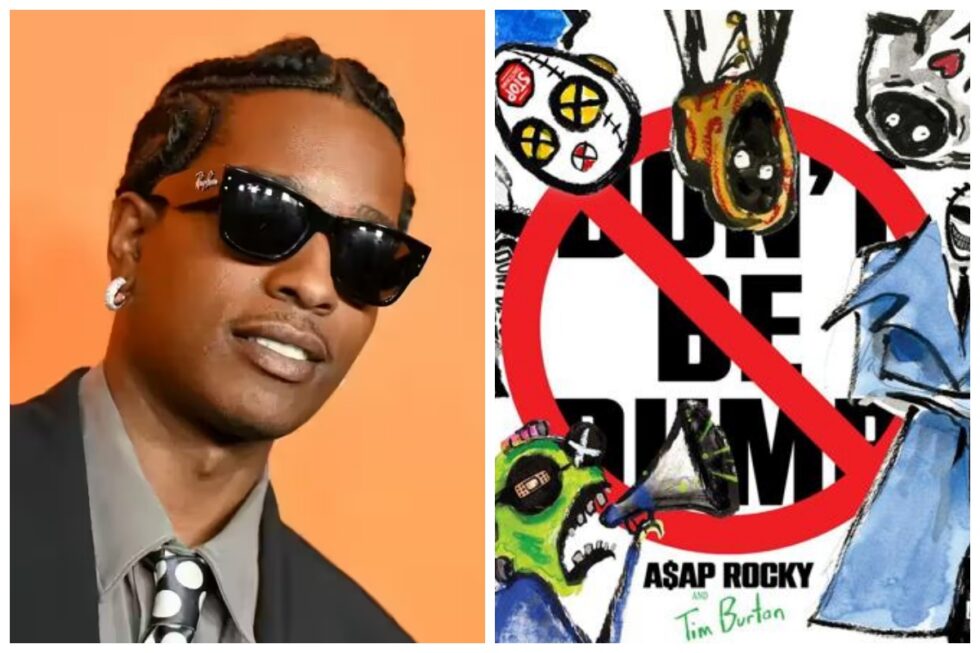
After an eight-year absence from album releases, A$AP Rocky has returned with Don’t Be Dumb, one of the most closely watched hip-hop albums of 2026. In an industry where even established artists release projects at an accelerating pace, such a long gap inevitably reshapes expectations. Don’t Be Dumb arrives not just as new music, but as a statement about where Rocky now stands as an artist, a public figure and a creative force, reports San Francisco Newsroom via Guardian.
Since Testing in 2018, Rocky has remained highly visible despite his musical silence. His personal life, legal battles, fashion influence and growing acting career ensured that he never fully disappeared from the cultural conversation. Still, Don’t Be Dumb marks his first attempt in years to reassert himself primarily as a recording artist. The result is an album that is lively, playful and often compelling, but also uneven, occasionally bloated and in need of firmer editorial control.
Eight years later: context behind the comeback
The gap between Testing and Don’t Be Dumb is critical to understanding the album. During that period, hip-hop itself shifted dramatically. New stars emerged, streaming economics reshaped album structures, and stylistic trends moved toward hyperproductivity. Against that backdrop, Rocky’s silence became increasingly conspicuous.
Testing divided critics and fans. While it produced the hit “Praise the Lord (Da Shine)”, many felt the album lacked the focus and charisma of Rocky’s early work. That uncertainty left him at a creative crossroads: continue pushing experimental ideas, or return to the more direct, swagger-heavy sound that made his name.
Don’t Be Dumb attempts to do both. It largely abandons the heavier avant-garde instincts of Testing while retaining a willingness to experiment. The album’s tone suggests an artist who is less interested in proving relevance than in enjoying the process again.
Sound and structure: confident momentum with excess weight
From a production standpoint, Don’t Be Dumb is brash and fast-moving despite its hour-long runtime. The beats are sharper, more rhythmic and more club-ready than much of Testing. The album avoids extended detours into abstraction, favouring punchier structures and clearer hooks.
That said, length remains an issue. Several tracks feel overproduced or lyrically underdeveloped, a common problem for albums built over many years. Some songs arrive fully formed and vivid; others feel like sketches that slipped through the final cut. The record would arguably benefit from a tighter edit, but its coherence remains intact.
Album overview
| Element | Details |
|---|---|
| Album | Don’t Be Dumb |
| Artist | A$AP Rocky |
| Release year | 2026 |
| Runtime | Approx. 60 minutes |
| Style | Hip hop, experimental rap |
| Notable collaborators | Tyler, the Creator; Hans Zimmer; Jessica Pratt |
| Previous album | Testing (2018) |
Standout tracks: charisma and controlled chaos
Rocky’s greatest strength has always been his presence, and Don’t Be Dumb leans heavily on that quality. On “Stole Ya Flow”, widely interpreted as a Drake diss, Rocky sounds energized and amused rather than angry. One of the track’s most quoted lines captures that tone perfectly:
“N***** gettin’ BBLs / Lucky we don’t body shame.”
The appeal lies not just in provocation, but in delivery. Rocky sounds like he is enjoying himself, and that confidence carries the track.
On “Playa”, the mood softens. Rocky adopts an almost advisory tone, rapping as if speaking to someone navigating love for the first time. The advice, however, remains characteristically blunt:
“No receipts, don’t text.”
“Air Force (Black Demarco)” stands out structurally. It opens with a harsh, glitch-heavy beat reminiscent of contemporary rage rap before pivoting into a hazy psych-rock groove. The shift feels intentional, almost meta, as if Rocky is responding to past criticism of his indie-leaning instincts.
Weaker moments: lyrical fatigue and overextension
Not every track maintains the same level of sharpness. On “Helicopter”, Rocky remarks that people would “do anything for a blue check”, a line that some critics see as dated in both theme and phrasing. The observation reflects a generational gap that occasionally surfaces across the album.
The collaboration “Whiskey” with Gorillaz illustrates another recurring issue. Rocky’s delivery drifts into near free association:
“Tipsy, kiss me so wet, they make bridges / I don’t burn no bridges / Tryna hold it in, I don’t burn no friendships.”
Here, lethargy threatens momentum. These moments do not ruin the album, but they interrupt its flow and reinforce the sense that not every idea was fully refined.
Collaborations and identity: many guests, one focal point
Despite a diverse guest list that includes figures as varied as Hans Zimmer and Jessica Pratt, Don’t Be Dumb never loses its centre of gravity. Rocky remains the dominant presence throughout. Unlike albums where features overwhelm the host artist, these collaborations function more as texture than competition.
The variety underscores Rocky’s broad cultural reach, but also highlights his role as curator rather than collaborator-by-committee. Even when experimenting, he rarely disappears into the background.
Where Don’t Be Dumb sits in Rocky’s career
Taken as a whole, Don’t Be Dumb is neither a flawless comeback nor a misstep. It represents Rocky’s strongest body of work since his 2013 debut, driven by renewed playfulness and an audible sense of enjoyment. While it lacks the concision of a classic, it succeeds in restoring momentum to his musical career.
For listeners alienated by Testing, this album offers reassurance. Rocky has not abandoned experimentation, but he has rebalanced it with accessibility and energy. The result is a record that invites repeated listening, even if it occasionally tests patience.
Key questions and clear answers
Is Don’t Be Dumb a full return to early A$AP Rocky sound?
Partially. The album revives his confidence and swagger while keeping selective experimental elements.
Why did the album take so long to release?
Rocky focused on acting, personal life and legal matters, releasing music only sporadically.
Are the lyrics stronger than on Testing?
Overall yes, though inconsistency remains across the tracklist.
Do the collaborations overshadow Rocky?
No. Guest appearances enhance the album without dominating it.
Is the album accessible to casual listeners?
Yes. Compared to Testing, Don’t Be Dumb is more straightforward and listener-friendly.
San Francisco News keeps the city, the Bay Area and the wider world informed with clear, useful reporting on what matters: How to buy Bruno Mars tickets in California as the San Francisco Bay Area date goes on sale