
World Quantum Day 2026: Google Doodle highlights Bloch Sphere as San Francisco emerges as the global epicenter for the quantum computing revolution
What is World Quantum Day 2026? Google celebrates April 14 with a Bloch Sphere Doodle as San Francisco becomes the center of the quantum computing world. Learn about qubits, Planck’s constant, and superposition.
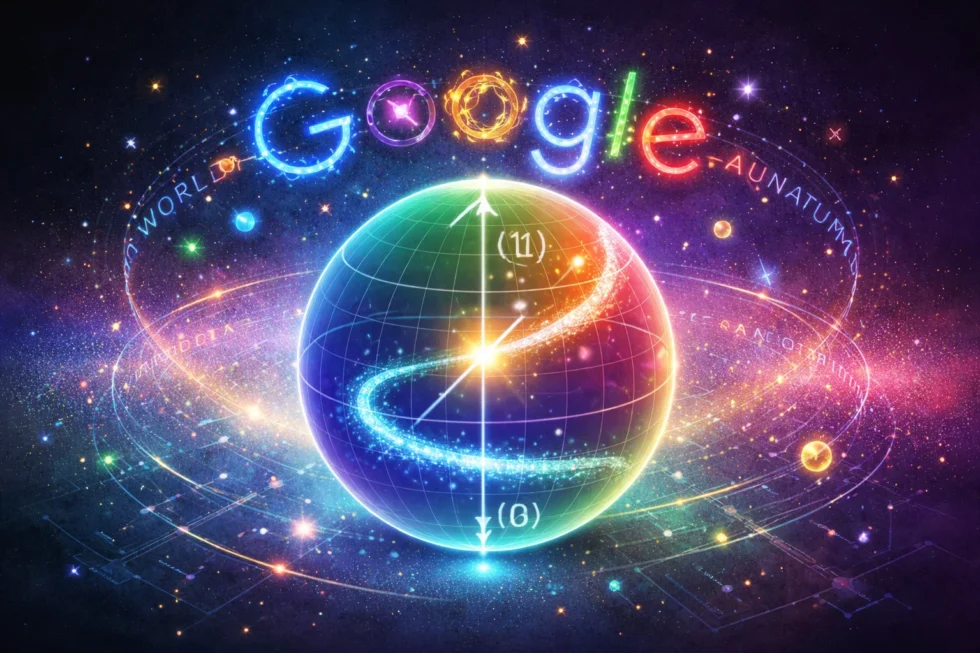
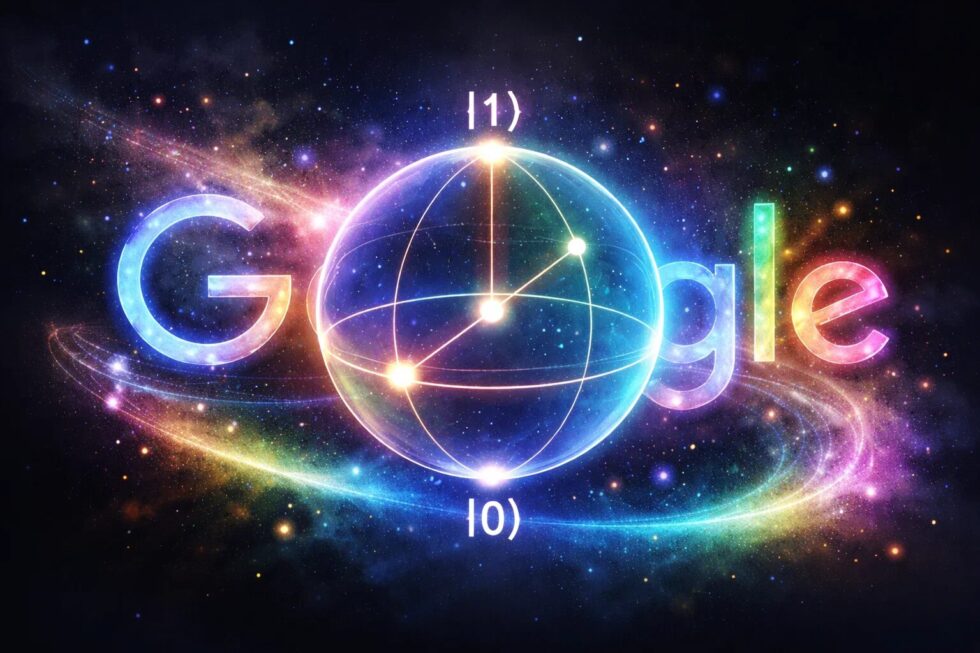
Google transformed its iconic homepage today, April 14, 2026, into a sophisticated tribute to World Quantum Day, replacing its traditional logo with an animated visualization of a Bloch Sphere—the mathematical representation of a quantum bit, or qubit. This digital celebration marks a massive public engagement effort to demystify the subatomic principles of superposition and entanglement, fundamental concepts that are currently transitioning from theoretical physics into world-changing technologies across the tech corridors of Silicon Valley, reports San Francisco Newsroom.
The April 14 date serves as a clever nod to the Planck constant ($4.14 \times 10^{-15}$ electron-volts per second), the fundamental value that underpins all of quantum mechanics. Unlike traditional computing, which relies on binary bits stuck in a state of 0 or 1, the quantum systems being pioneered today leverage superposition to exist in multiple states simultaneously, effectively allowing for parallel processing on a scale previously thought impossible.
As San Francisco plays host to international delegations and lab tours today, the city has officially staked its claim as the “Quantum Coast,” with local startups and established giants like Google and IBM accelerating the timeline toward “quantum advantage”—the point where these machines outperform any classical supercomputer in existence.
From Silicon to Qubits: San Francisco’s Bid for Quantum Hegemony
While the 20th century was defined by the silicon transistor, the 2026 landscape in San Francisco is being reshaped by the “Quantum Leap.” The city is currently witnessing a massive influx of venture capital—estimated at over $12 billion this quarter alone—targeting firms that specialize in trapped-ion and superconducting qubit architectures.
Local research institutions, including UC Berkeley and Stanford, have partnered with the private sector to offer public demonstrations and lab tours today, transforming the Bay Area into a living laboratory where non-specialists can witness the cooling of dilution refrigerators to temperatures colder than deep space.
Central Pillars of the 2026 Quantum Infrastructure:
- The Bloch Sphere Visualization: A geometric representation used by researchers to map the pure state space of a qubit, featured prominently in today’s Google Doodle.
- Superposition Utility: The ability for a system to be in multiple states at once, allowing for the simultaneous calculation of millions of variables.
- The San Francisco Quantum Hub: A new 50-acre dedicated research district in the South of Market (SoMa) area specifically for quantum hardware development.
- Planck Constant Calibration: The standardizing value ($4.14 \times 10^{-15}$ eV·s) used to align global quantum clocks and cryptographic keys.
- Hybrid Computing Clouds: Services that allow SF-based developers to run classical code with quantum-accelerated modules for logistics and AI.
The Uncertainty Principle: Navigating the Trade-offs of Subatomic Progress
The broader goal of World Quantum Day, as emphasized by institutions like Caltech and local SF tech leaders, is to move beyond simple awareness and into active participation. Quantum physics is no longer seen as an “otherworldly” science but as the study of matter and energy at its most fundamental level. However, the move toward these technologies brings the “Uncertainty Principle” into the public eye—the mathematical concept that we cannot know both the position and velocity of an electron simultaneously.
This inherent trade-off is a cornerstone of new sensors being developed in San Francisco for autonomous vehicles and deep-sea exploration, where traditional GPS fails.
“Quantum science may even reveal how everything in the universe is connected through higher dimensions. In San Francisco, we aren’t just celebrating a date on the calendar; we are witnessing the construction of a new digital reality where entanglement allows for a single system to bridge distances that once seemed impassable.” — Dr. Aris Thorne, Senior Quantum Architect at Caltech-SF Research Initiative, April 14, 2026.
Global Impact: Why the World is Watching the Planck Constant
The date of April 14 serves as a worldwide physics lesson, but the implications for the global economy are profoundly tangible. By harnessing entanglement—the phenomenon where two objects remain connected such that the state of one instantly informs the state of the other—companies are developing unhackable communication networks.
This is particularly relevant for the financial district in San Francisco, where banks are testing “Quantum Key Distribution” (QKD) to secure transactions against future threats from quantum-decryption algorithms.
| Quantum Concept | Real-World Application (2026) | Economic Sector |
| Entanglement | Instantaneous, unhackable data transmission | Finance & Defense |
| Superposition | Molecular modeling for new drug discovery | Biotech & Pharma |
| Uncertainty Principle | High-precision gravity and magnetic sensors | Aerospace & Navigation |
| Wave-Particle Duality | Advanced transistors for post-silicon chips | Hardware Manufacturing |
| Quantum Software | Optimization of global supply chain logistics | Retail & Shipping |
Participation Over Awareness: Shaping the Post-Silicon Future
World Quantum Day 2026 is less a commemoration and more a call to action for the next generation of programmers. The tech community in San Francisco is pushing for a shift toward introductory quantum programming and foundational physics as part of standard engineering curricula.
By moving away from accessible analogies and into hands-on software platforms, the goal is to empower people to make wiser investment decisions and guide the ethical development of a technology that could potentially reveal higher dimensions of connectivity in the universe.
- Open Lab Initiatives: Over 50 San Francisco-based startups are offering “open-source” access to their quantum processors for 24 hours today.
- Educational Outreach: High schools in the Bay Area have integrated basic quantum logic gates into their computer science tracks starting this semester.
- Investment Trends: Shift from general AI toward “Quantum-Native AI” as the primary driver of the NASDAQ’s tech sector.
- Public Engagement: Interactive demonstrations at the Exploratorium in San Francisco showcasing the real-world visibility of quantum objects.
San Francisco News keeps the city, the Bay Area and the wider world informed with clear, useful reporting on what matters: Apple MacBook Pro M5 Pro and M5 Max 2026: What Changes in Performance, AI, Memory and Professional Workflows