



From Sneakers to Supercomputing: Can Allbirds’ AI Pivot Save the San Francisco Icon in 2026
San Francisco’s Allbirds pivots to AI as “NewBird AI,” launching a GPU-as-a-Service model. Explore the 600% stock surge, 2026 market trends, and the future of AI infrastructure
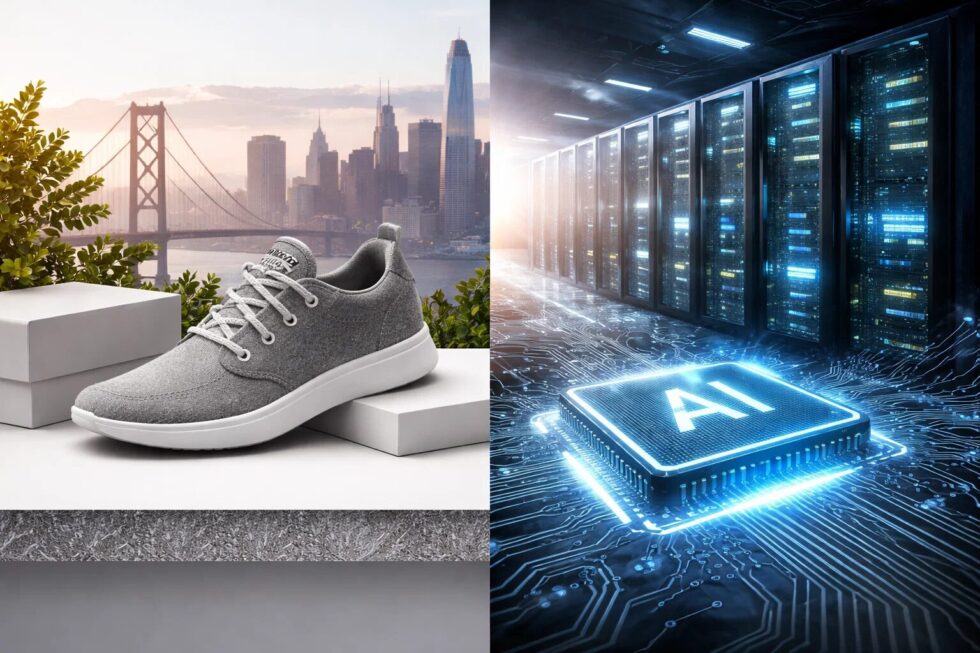
The corporate landscape of San Francisco has just witnessed one of the most radical transformations in modern business history. Allbirds, the footwear brand once inseparable from the Silicon Valley “uniform,” has officially announced its transition into a specialized Artificial Intelligence infrastructure provider. By divesting its core shoe business and securing a massive $50 million investment, the company is betting its entire future on the insatiable global demand for computing power. This pivot represents a critical moment for investors and tech observers alike, signaling a new era where legacy consumer brands must either reinvent themselves through deep tech or face obsolescence in an AI-driven economy, reports San Francisco Newsroom via sfchronicle.
The NewBird AI Strategy: Understanding the “GPU-as-a-Service” Model
The core of Allbirds’ reinvention lies in a $50 million convertible financing agreement aimed at building a robust AI computational infrastructure. Rather than designing sustainable wool runners, the company is now focused on acquiring high-performance Graphics Processing Units (GPUs)—the specialized chips required for the intensive mathematical calculations behind AI.
By pivoting to a “GPU-as-a-Service” (GPUaaS) model, NewBird AI intends to lease this computing power to third-party developers and enterprises. This addresses a massive structural deficit in the 2026 market, where traditional cloud providers like AWS and Google Cloud are often unable to meet the dedicated hardware demands of boutique AI labs.
This transition is not merely a change in product, but a complete overhaul of the company’s capital structure. Following the sale of its footwear assets to American Exchange Group for $39 million, Allbirds has effectively liquidated its physical retail footprint to fund a high-margin digital utility.
For the average user or small business owner, this means NewBird AI will function as a specialized “digital landlord,” providing the raw horsepower needed for everything from medical research simulations to real-time generative video synthesis. The move reflects a 2026 reality where compute is the new oil, and owning the hardware is far more lucrative than owning the brand that wears it.
| Feature | Allbirds (Legacy Model) | NewBird AI (2026 Model) |
| Primary Product | Sustainable Footwear | High-Performance Compute |
| Core Asset | Retail Stores & Wool Supply Chain | H100/B200 GPU Clusters |
| Revenue Stream | Direct-to-Consumer (DTC) Sales | GPU-as-a-Service (Leasing) |
| Market Focus | Lifestyle & Sustainability | AI Development & Infrastructure |
| Valuation Driver | Inventory Turnover | TFLOPS & Cluster Connectivity |
Practical advice for investors: When evaluating a pivot of this magnitude, focus on the “Compute-to-Debt” ratio. In 2026, the value of an AI infrastructure company is tied directly to its physical possession of unallocated GPUs. NewBird AI’s success depends entirely on its ability to close the $50 million deal in Q2 and immediately deploy hardware. If you are looking to enter the AI infrastructure market, understand that “availability” is the primary competitive advantage. Small and mid-sized AI startups are currently paying premiums of up to 40% for dedicated GPU access outside of the major cloud ecosystems, which creates a significant entry window for companies like NewBird AI.
From Wool to Silicon: Navigating the Structural Demand for AI Compute
The decision to abandon the footwear industry comes after years of Allbirds struggling with declining sales and rising operational costs. By mid-2025, it became clear that the sustainable apparel market had become oversaturated, while the demand for AI specialized computing was growing exponentially. According to market data from early 2026, the structural demand for high-performance computing (HPC) has outpaced supply by nearly 300%. NewBird AI is positioning itself as a “bridge” for companies that need dedicated clusters but cannot afford the multi-year waitlists or restrictive terms of Tier-1 cloud providers.
For the San Francisco tech ecosystem, this pivot is a case study in radical adaptation. The company’s intent to purchase high-performance GPUs and rent them out is a high-stakes play in a market dominated by Nvidia and AMD.

By leveraging its remaining capital and the new $50 million infusion, NewBird AI is effectively jumping into the middle of the “Silicon Gold Rush.” For observers, the lesson is clear: in 2026, a company’s value is increasingly determined by its place in the AI stack. Whether you produce shoes or software, if you can provide the underlying infrastructure for intelligence, the market will reward you with unprecedented volatility and potential growth.
Strategic Guidelines for Companies Considering an AI Infrastructure Pivot
As Allbirds transitions to NewBird AI, other struggling retail or consumer-facing brands may look to this as a blueprint. However, moving into the GPUaaS space requires more than just capital; it requires specialized engineering talent and a deep understanding of data center logistics. In 2026, the “NewBird” approach is a high-risk, high-reward strategy that demands a total abandonment of previous brand identities. If your organization is considering a similar shift, you must prioritize power-efficient cooling solutions and high-speed interconnectivity (InfiniBand/RoCE), as raw GPU count is no longer the only metric of success in a competitive leasing market.
- Asset Liquidation: Follow the Allbirds model of selling off non-core physical assets to generate immediate liquidity for hardware acquisition.
- Targeting the “Missing Middle”: Focus on providing compute to companies that are too large for basic cloud tiers but too small for massive enterprise contracts.
- Rebranding Urgency: A name change (e.g., NewBird AI) is essential to signal to the market that you are no longer a consumer goods company.
- Regulatory Compliance: Ensure that your GPU clusters meet the 2026 “Green Compute” standards to avoid carbon taxes on data center operations.
- Security First: In the 2026 leasing market, “Confidential Computing” features are a requirement for enterprise clients handling sensitive data.
- Short-Term Leasing: Offer flexible, short-term “burst” capacity to attract startups that need to train models quickly without long-term commitments.
- Hardware Diversification: While H100s are the standard, investing in specialized ASICs for inference can provide a lower-cost alternative for specific clients.
- Local Connectivity: For SF-based companies, offering low-latency edge compute can be a significant draw for the city’s burgeoning robotics industry.
The Economic Implications of a 600% Stock Surge in 2026
The market’s reaction to the Allbirds announcement—a 600% jump in share price—is a testament to the “AI Halo Effect” that continues to dominate 2026 trading. Investors are no longer looking for steady dividends from retail; they are looking for exposure to the AI backbone. However, this level of volatility comes with significant risk.
Market analysts warn that the “NewBird” valuation is currently based on potential infrastructure rather than realized revenue. For the San Francisco economy, this reflects a shift where the city’s identity is moving away from “App-based” startups toward “Hardware and Infrastructure” powerhouses.
Furthermore, the $50 million convertible financing is a double-edged sword. If NewBird AI fails to secure the necessary chips due to ongoing global supply chain constraints, the stock could retract as quickly as it rose. The 2026 market is unforgiving to “paper-only” AI companies.
To sustain this growth, NewBird AI must demonstrate a functioning data center environment by the end of Q3. For the broader public, this story serves as a reminder that the companies we once knew for their physical products are now fighting to survive in a world where digital intelligence is the only currency that truly matters.
Frequently Asked Questions
Will I still be able to buy Allbirds shoes?
Yes, but they will be produced and sold by the American Exchange Group, which purchased the brand assets. Allbirds (as NewBird AI) will no longer manage the footwear business.
What is “GPU-as-a-Service”?
It is a cloud computing model where a company rents out high-performance graphics chips to clients who need power for AI training, scientific research, or 3D rendering.
Why did Allbirds choose to become an AI company?
Declining footwear sales and a massive market gap in AI infrastructure provided a strategic opportunity to pivot into a high-growth, high-margin industry.
Is NewBird AI based in San Francisco?
Yes, the company remains headquartered in San Francisco, leveraging the city’s position as the global hub for AI development.
What are the risks of this transition?
The primary risks include the high cost of GPU hardware, intense competition from established cloud giants, and the volatility of the AI market.
When will the transition be complete?
The rebranding and financing are expected to close in the second quarter of 2026, pending shareholder approval.
San Francisco News keeps the city, the Bay Area and the wider world informed with clear, useful reporting on what matters: World Quantum Day 2026: Google Doodle highlights Bloch Sphere as San Francisco emerges as the global epicenter for the quantum computing revolution