



Apple MacBook Pro M5 Pro and M5 Max 2026: What Changes in Performance, AI, Memory and Professional Workflows
Apple MacBook Pro M5 Pro and M5 Max 2026: up to 8× faster AI, 128GB unified memory, 614GB/s bandwidth, 14.5GB/s SSD, Wi-Fi 7, Thunderbolt 5. Specs and release dates.
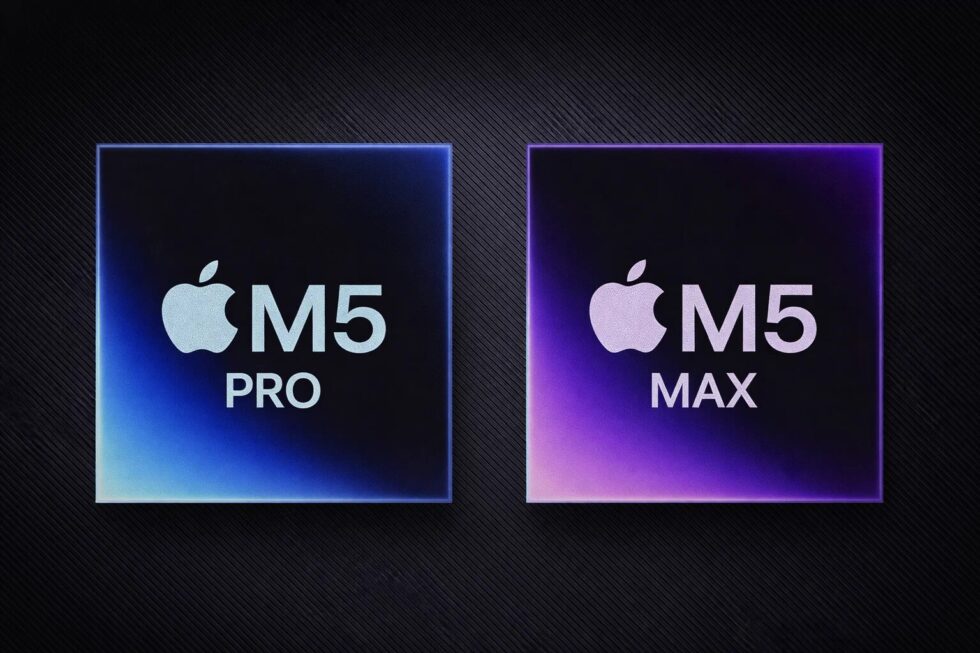
Apple MacBook Pro M5 Pro and M5 Max were officially introduced on 3 March 2026 by Apple via Apple Newsroom in Cupertino, California. According to Apple, the new generation delivers up to 8× faster AI performance compared with M1-based MacBook Pro models, up to 4× faster large language model (LLM) processing compared with M4, supports up to 128GB of unified memory with bandwidth up to 614GB/s, and offers SSD speeds reaching 14.5GB/s. The notebooks introduce Wi-Fi 7, Thunderbolt 5 connectivity and up to 24 hours of battery life. Pre-orders open on 4 March 2026, with retail availability beginning 11 March 2026. The details are based on Apple’s official press release published the same day, reports San Francisco Newsroom.
M5 Architecture: Fusion Design Built Around AI Workloads
The defining structural shift in the M5 generation lies in what Apple calls its new “Fusion Architecture.” According to the company, this design merges two silicon dies into a single system-on-a-chip. The objective is not merely higher clock speeds but more efficient internal data pathways between CPU, GPU and Neural Engine.
Apple describes the M5 chips as engineered “from the ground up for AI.” This framing suggests that artificial intelligence workloads were considered foundational in chip layout decisions. Rather than treating AI acceleration as a secondary feature, Apple integrates neural computation pathways directly into the chip’s architectural logic.
The CPU configuration scales up to 18 cores, including six “super cores” and twelve performance cores. Apple claims up to 30% higher CPU performance compared with the previous M4 Pro and M4 Max generation. These figures are based on internal testing conducted in January and February 2026 under specific laboratory conditions.
For professionals, this architectural change targets sustained workloads: compiling large software projects, running simulation models, processing large datasets or encoding high-resolution video over extended periods.
Unified Memory and 614GB/s Bandwidth: Structural Impact on AI and Rendering
A central component of the M5 update is the unified memory system. Apple continues to use a shared memory pool accessible by CPU, GPU and Neural Engine. This eliminates the need for data duplication between discrete memory segments.
In the M5 Max configuration, memory bandwidth reaches up to 614GB/s, while M5 Pro supports up to 307GB/s. According to Apple, higher bandwidth directly affects token generation speed in large language models and improves real-time rendering performance in graphics-intensive workflows.
Maximum Configuration Overview
| Specification | M5 Pro | M5 Max |
|---|---|---|
| CPU | Up to 18 cores | Up to 18 cores |
| Unified Memory | Up to 64GB | Up to 128GB |
| Memory Bandwidth | Up to 307GB/s | Up to 614GB/s |
| Base SSD | 1TB | 2TB |
| External Displays | Up to 2 | Up to 4 |
For AI researchers or video editors working with 8K footage, memory bandwidth becomes a limiting factor. Increased throughput reduces latency when transferring large data blocks between compute units.
GPU with Neural Accelerator: Distributed AI Processing at Core Level
A major technical development in the M5 generation is the integration of a Neural Accelerator into each GPU core. Instead of relying solely on a centralized neural engine, Apple distributes AI acceleration across the graphics subsystem.
Apple reports:
- Up to 4× faster LLM prompt processing compared with M4
- Up to 8× faster AI image generation compared with M1
- Up to 50% higher overall GPU performance compared with M4
Applications referenced in Apple’s announcement include:
- Maxon Redshift for GPU-based rendering
- Blackmagic DaVinci Resolve Studio for AI-powered video effects
- Topaz Video for AI-driven enhancement
Distributed neural acceleration allows parallel AI tasks to run simultaneously across GPU cores. For developers working with local language models, this may translate to faster token generation and lower inference latency. For creative professionals, it can reduce rendering time for AI-enhanced visual effects.
Apple notes that all performance metrics are “up to” figures derived from internal benchmark tests.
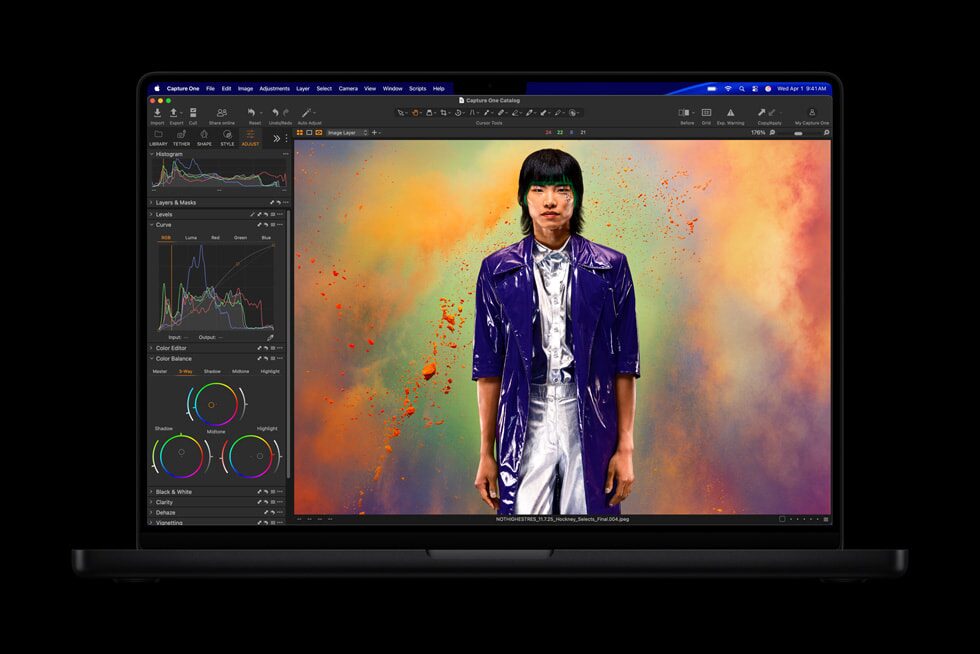
SSD Performance up to 14.5GB/s and Increased Base Storage
Apple states that the new MacBook Pro achieves SSD read and write speeds of up to 14.5GB/s, representing up to twice the throughput of the previous generation under internal testing conditions.
Base storage configurations have been raised:
- M5 Pro models now start at 1TB
- M5 Max models start at 2TB
- The 14-inch configuration also includes 1TB by default
For professional users managing high-resolution video projects or large AI datasets, increased base storage reduces the need for immediate external expansion.
Full technical specifications are available at apple.
Connectivity: Wi-Fi 7, Bluetooth 6 and Thunderbolt 5
The MacBook Pro 2026 includes three Thunderbolt 5 ports, HDMI with 8K support, an SDXC card slot and MagSafe 3 charging.
The new Apple-designed N1 wireless chip enables Wi-Fi 7 and Bluetooth 6 support. Apple states that Wi-Fi 7 improves throughput and stability in high-density network environments.
M5 Pro models support up to two external high-resolution displays, while M5 Max supports up to four. For multi-monitor professional setups, this expands workstation flexibility.
Battery Life and Sustained Performance
Apple claims up to 24 hours of battery life. Users upgrading from Intel-based models may gain up to 13 additional hours, while those upgrading from M1 models may gain up to three hours.
Fast charging enables up to 50% battery capacity in approximately 30 minutes using a 96W USB-C adapter or higher.
Apple emphasizes that performance remains consistent whether the system operates on battery or while plugged in.
macOS Tahoe and Apple Intelligence Integration
Alongside the hardware launch, Apple introduces macOS Tahoe. The system integrates Apple Intelligence features into Spotlight, Messages, FaceTime and Phone.
Live Translation enables real-time translation of text and audio across languages. Developers gain access to Apple’s Foundation Models framework, enabling AI capabilities within third-party applications.
Apple notes that some features may be regionally limited or remain in beta status.
Market Positioning in 2026: AI-Centric Professional Computing
The 2026 professional laptop market increasingly emphasizes local AI processing. Memory bandwidth, neural acceleration and sustained compute performance are becoming structural differentiators.
Apple positions M5 Pro for high-demand but general professional workflows, while M5 Max targets compute-intensive scenarios such as:
- 8K post-production
- 3D rendering pipelines
- Engineering simulations
- Local AI model training
The distinction between the two versions centers primarily on memory capacity, bandwidth and multi-display support.
Purchase Considerations for Professionals
Before ordering, professional users may evaluate:
- Required unified memory capacity (64GB vs 128GB)
- Storage needs beyond base configuration
- External display requirements
- Software compatibility with macOS Tahoe
- Total budget including upgrades
Pre-orders begin 4 March 2026. Retail availability starts 11 March 2026 via apple.com, the Apple Store app and authorized resellers.
The MacBook Pro M5 Pro and M5 Max represent a continuation of Apple’s silicon roadmap with increased emphasis on distributed AI acceleration, higher memory bandwidth and sustained performance under professional workloads. For users operating data-intensive or AI-driven workflows, the structural improvements in memory architecture and GPU-level neural integration define the primary generational shift.
San Francisco News keeps the city, the Bay Area and the wider world informed with clear, useful reporting on what matters: Where to buy Samsung Galaxy S26 in San Francisco and across the USA – verified stores & prices