



Claude Cowork AI agent: what Anthropic’s new service does as it launches on 13 January to automate files and office work
On 13 January 2026, Claude Cowork by Anthropic introduced an AI agent that manages files, creates documents and automates office workflows, challenging Microsoft Copilot and Google Workspace in the enterprise productivity market.

13 January 2026 — US artificial intelligence company Anthropic has unveiled Claude Cowork, a new AI agent designed to work directly inside a user’s computer, allowing machines to manage files, create documents and automate everyday office tasks.
Claude Cowork, Anthropic AI agent, file automation and enterprise productivity are now at the centre of Silicon Valley’s latest AI shift, as the company moves beyond chatbots into software that can actively control and organise a digital workspace. The system can open, read, organise and generate files across a desktop environment and has been released as a research preview for subscribers on Anthropic’s high-end Max plans. This is reported by San Francisco Newsroom, citing Anthropic and Fortune’s technology desk.
Anthropic describes Claude Cowork as a digital colleague rather than a conversational assistant — a system that can be given instructions and left to complete them independently. With this launch, the company enters direct competition with workplace automation platforms from Microsoft, Google and OpenAI, intensifying the race to dominate the future of AI-powered office work.
A desktop AI instead of a chat window
Claude Cowork is built on Claude Code, the company’s existing development assistant, but it is designed for office workers rather than programmers. Instead of typing commands into a coding interface, users can give everyday instructions such as organising folders, creating spreadsheets or preparing reports.
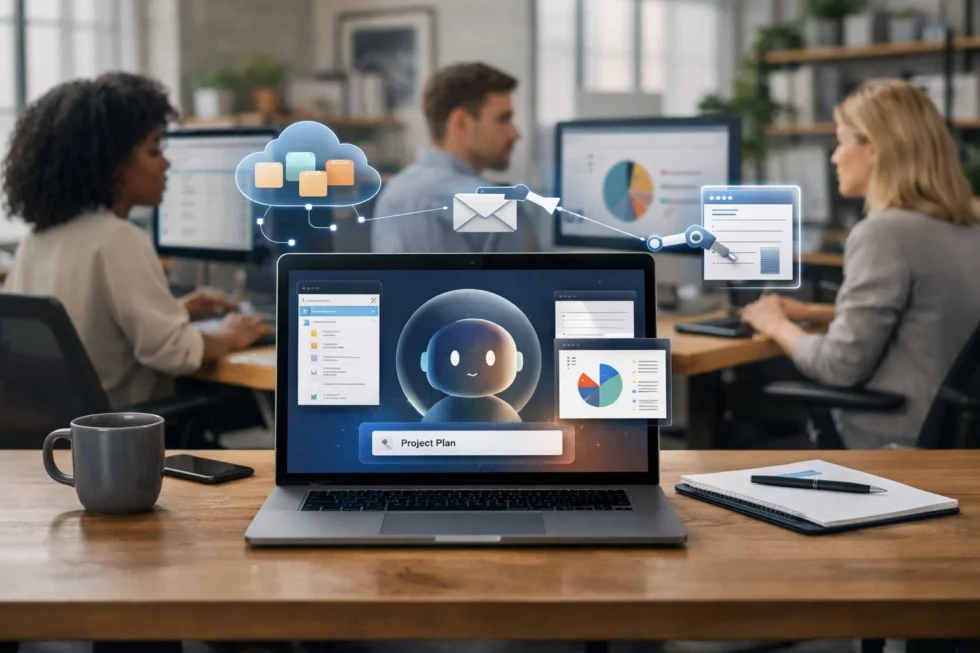
Among the examples shown by Anthropic were:
- sorting and renaming downloaded files
- converting screenshots of receipts into expense tables
- pulling information from multiple documents to create first drafts
- restructuring folders and archives
- producing formatted documents across common office software
The company says this allows AI to operate across a full digital workspace, rather than being limited to text responses inside a browser window.
Built at speed using Claude itself
According to Boris Cherny, head of Claude Code at Anthropic, Claude Cowork was built in just around ten days, with much of the development work carried out using Claude’s own internal coding, testing and automation tools. Engineers used the model to write and modify code, connect software components and test how the agent interacted with real files and applications.
The development process illustrates how large AI models are increasingly being used not only as assistants, but as active participants in software creation, capable of generating code, debugging workflows and deploying new features with minimal human input. This allows AI labs to prototype and release new products far faster than was previously possible.
Technology analyst Simon Willison said the launch shows how developer-focused AI systems are now being converted into general-purpose workplace tools, adding that similar file-handling and task-executing agents from Google and OpenAI are likely to appear as competition in enterprise AI accelerates.
Claude Cowork signals Anthropic’s move into enterprise productivity AI
With the launch of Claude Cowork, Anthropic is moving deeper into the corporate productivity market, a sector currently led by Microsoft Copilot and increasingly targeted by Google and OpenAI. Unlike consumer chatbots, enterprise AI agents are designed to operate inside real business environments. They are expected to:
- access and search internal company documents
- manage workflows and task queues
- generate reports and spreadsheets
- edit and update files
- interact with enterprise software such as accounting, CRM and document systems
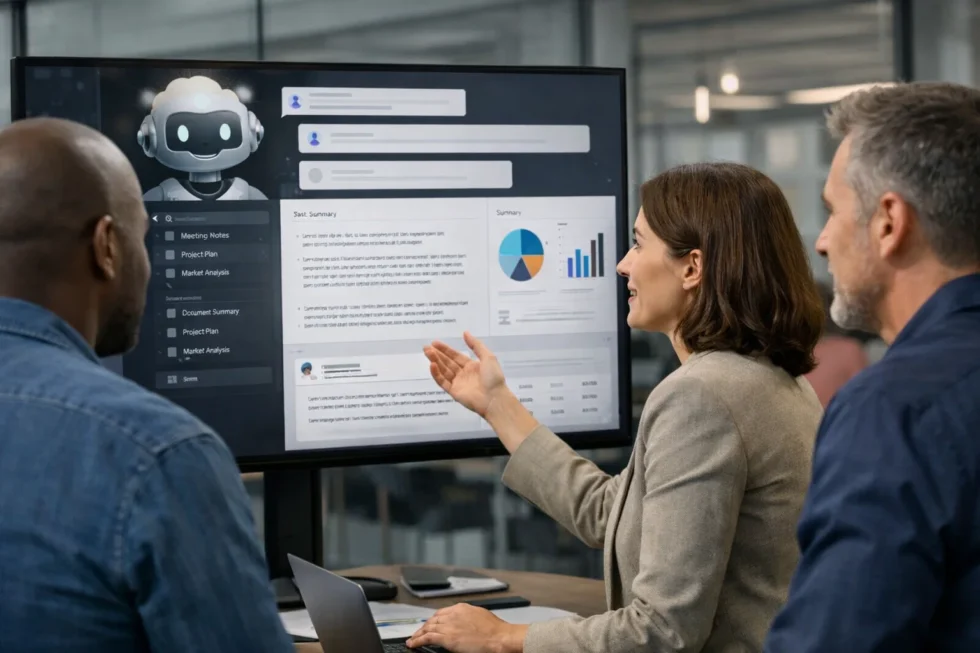
Because Claude Cowork is built on the same core technology as Claude Code — a system already capable of handling structured data, file systems and complex multi-step operations — analysts say Anthropic may have an advantage over AI assistants that were originally designed only for conversational use. Industry sources indicate that Anthropic has been gaining traction among business customers, particularly firms seeking AI tools that can carry out work autonomously rather than simply provide suggestions.
Security and control risks
Anthropic has acknowledged that giving an AI system access to files and software introduces new risks. One of the main threats is prompt injection, where hidden instructions inside documents, websites or images cause an AI to perform unintended actions — such as modifying files, sharing data or executing unwanted commands. The company advises users to restrict Cowork’s access to trusted sources when using browser extensions and web-connected features. However, it also admits that fully securing AI agents remains an unsolved problem across the industry.
Impact on AI startups
The release has triggered concern among smaller AI firms that specialise in tasks such as:
- document processing
- receipt scanning
- file organisation
- report generation
- data extraction
Claude Cowork combines file management, document creation and data extraction into a single system backed by one of the world’s largest AI research labs. For startups that have built their businesses around solving just one of these tasks, this raises competitive pressure as major AI companies increasingly bundle core functions into their main platformsrather than leaving them to third-party tools.
Some founders argue that specialist software in sectors such as law, finance and healthcare may remain defensible, where regulation, security and tightly defined workflows limit how far general-purpose AI agents can replace dedicated enterprise systems.
Anthropic is rolling out Claude Cowork first to its highest-paying Max subscribers, placing it in the same early-access category as Microsoft Copilot for 365, Google Workspace AI and OpenAI’s custom GPT agents. Unlike those tools, however, Cowork is designed to operate directly inside a user’s file system, allowing it to read, edit and organise documents without continuous human supervision.
That makes Cowork closer to a software worker than a conversational assistant. While Copilot and ChatGPT typically suggest actions or generate text on request, Cowork is built to execute multi-step tasks autonomously — from moving files and compiling data to producing finished documents. If this model proves reliable at scale, it would signal a shift in office technology from AI that supports employees to AI that actively performs part of the work.
San Francisco News keeps the city, the Bay Area and the wider world informed — with clear, useful reporting on what’s happening, where it matters and what people need to know across technology, business and public life.