



San Francisco Bay Area 2026 World Cup Infrastructure and Logistics Masterplan
Discover the San Francisco Bay Area’s preparation for the 2026 World Cup. Detailed guide on transit upgrades, Levi’s Stadium renovations, security protocols, and fan zone locations.
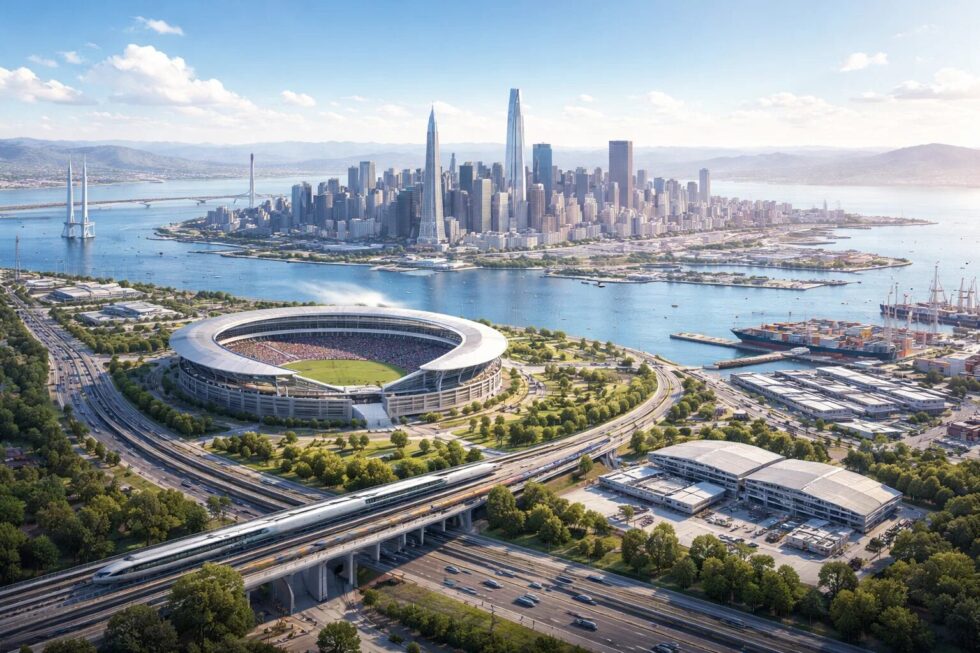
The San Francisco Bay Area is currently entering a critical acceleration phase as it prepares to host a series of pivotal matches for the FIFA World Cup 2026. Centered at Levi’s Stadium in Santa Clara, this global event is expected to draw over 500,000 unique international visitors to the region, necessitating a complete overhaul of existing transportation and security protocols. For residents and businesses, this means a massive influx of capital investment into public transit, but also significant logistical challenges regarding daily commutes and urban mobility. Understanding these changes is vital for anyone living in or visiting the region, as the success of the tournament hinges on the seamless integration of San Francisco’s tourism hub with the South Bay’s sporting infrastructure. This report is provided by the San Francisco Newsroom.
Levi’s Stadium Renovation and Tech Integration for 2026
Levi’s Stadium is undergoing a $250 million enhancement project specifically designed to meet FIFA’s stringent Category 1 requirements for the 2026 tournament. The upgrades focus on high-speed connectivity, state-of-the-art turf management systems, and expanded hospitality suites to accommodate the unprecedented volume of international media and VIP delegations. As of 2026, the stadium has integrated a new 6GHz Wi-Fi network capable of supporting 70,000 simultaneous high-definition streams, ensuring that the Silicon Valley venue remains at the forefront of digital sports experiences. These improvements are not merely cosmetic; they represent a fundamental shift in how the venue handles massive, simultaneous data and foot traffic loads.
Beyond the physical structure, the surrounding Santa Clara perimeter is being redesigned to manage the “last mile” of fan arrival. FIFA regulations require a security “hard shell” around the stadium, which means traditional parking will be restricted in favor of shuttle drops and mass transit off-loading. Local authorities are finalizing the construction of temporary pedestrian bridges to separate fan flows from local vehicle traffic, a move intended to prevent the gridlock that previously plagued major events in the South Bay. This strategy is essential for maintaining the 2.5-hour “clearance window” required for emergency vehicle access during peak match hours.
- Total Investment: $250 million for stadium-specific infrastructure.
- Connectivity: Deployment of Wi-Fi 7 and 5G-Advanced across the entire stadium precinct.
- Seating Expansion: Temporary modular units to maximize FIFA-authorized capacity.
- Turf Technology: Installation of a hybrid grass system with advanced drainage for multi-match durability.
- Energy Efficiency: Expansion of the solar terrace to offset 100% of match-day electricity consumption.
| Infrastructure Feature | Status 2026 | Impact on Fans/Residents |
| Levi’s Stadium Capacity | 71,000 (Expandable) | Increased availability for high-demand matches. |
| Caltrain Electrification | Fully Operational | 30-minute San Francisco to Santa Clara express service. |
| VTA Light Rail Upgrades | Phase 3 Complete | High-capacity shuttle loops from San Jose Diridon Station. |
| Security Perimeter | 1.5 Mile Zone | Restricted local driving; mandatory shuttle use. |
| Fan Fest Locations | SF Waterfront / SJ Plaza | Centralized hubs for non-ticketed fan engagement. |
Radical Transportation Overhaul: Connecting San Francisco to Santa Clara
The most significant hurdle for the Bay Area host committee is the 40-mile distance between San Francisco’s hotel density and the match venue in Santa Clara. To solve this, the region has completed the full electrification of the Caltrain corridor, a project that finally allows for high-performance electric multiple units (EMUs) to run at increased frequencies. In 2026, Caltrain will operate a “World Cup Express” service, moving fans from San Francisco’s 4th and King Station to the Mountain View transit hub in under 45 minutes. This is a massive improvement over traditional diesel services and is expected to handle approximately 40% of the total match-day spectator volume.
Practical advice for visitors in 2026 is to avoid car rentals entirely during match weeks. The Bay Area’s “Integrated Transit Fare” system now allows a single digital pass to be used across BART, Caltrain, MUNI, and VTA, significantly simplifying the multi-modal journey. Furthermore, the Santa Clara Valley Transportation Authority (VTA) has increased the frequency of the Orange Line light rail, which drops fans directly at the stadium gates. By utilizing the “Transit First” strategy, officials aim to keep the Highway 101 and I-280 corridors open for residents and essential services, minimizing the economic friction of the tournament on the local workforce.
- Express Routes: Caltrain “special event” trains every 15 minutes on match days.
- San Jose Diridon Hub: Serving as the primary transfer point for fans coming from San Jose International (SJC).
- BART Extensions: Enhanced 24-hour service on the Berryessa/North San José line.
- Ferry Services: Expanded San Francisco to Redwood City ferries with connecting shuttles to the South Bay.
- Bicycle Superhighways: Temporary secure “bike valets” at Levi’s Stadium with 5,000+ capacity.
Security Protocols and the “Hard Perimeter” Strategy
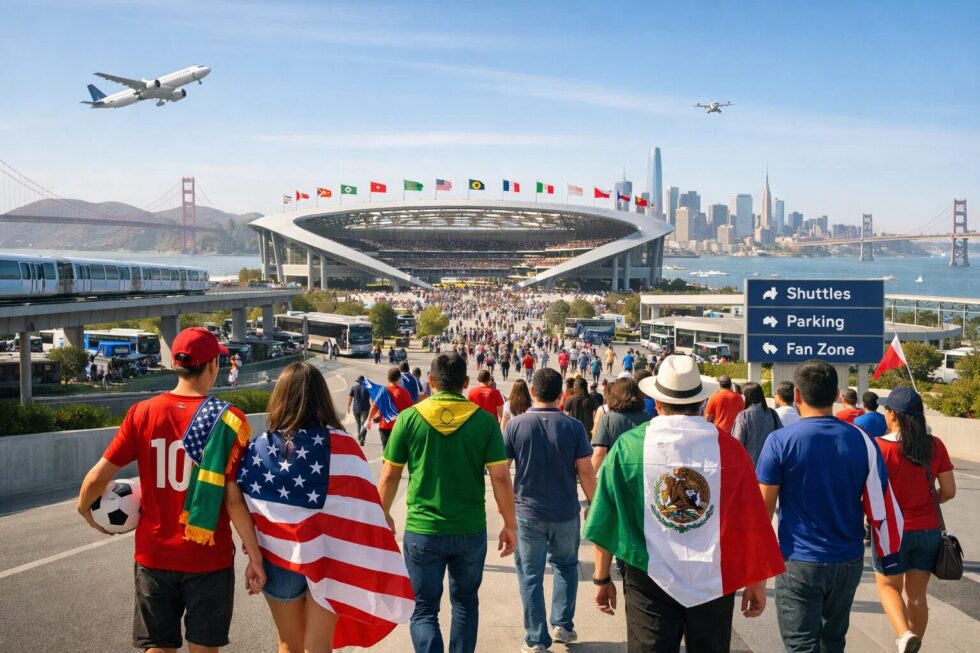
Security for the 2026 World Cup is being managed as a National Special Security Event (NSSE), bringing together the FBI, Department of Homeland Security, and local Bay Area police departments. A 1.5-mile “Hard Perimeter” will be established around Levi’s Stadium 48 hours before each kickoff, restricting all non-authorized vehicle movement. Residents living within this zone in Santa Clara are being issued digital “Local Access Passes” to allow them to bypass checkpoints. This level of security is unprecedented for the region and is designed to mitigate the risks associated with such a high-profile global gathering, ensuring the safety of both international dignitaries and local citizens.
In San Francisco, security measures are focused on the “Fan Fest” zones located along the Embarcadero and at Civic Center. These areas will utilize advanced AI-driven crowd monitoring to prevent overcrowding and manage pedestrian bottlenecks. Local businesses are encouraged to participate in the “World Cup Safe Zone” program, which provides guidelines on emergency protocols and communication channels with the city’s emergency operations center. For the reader, the most important takeaway is to allow at least four hours for stadium entry, as the multi-layered security screenings at Levi’s Stadium will be significantly more rigorous than those for standard NFL games.
- Credentialing: Mandatory background checks for all stadium staff and vendors.
- Drone Defense: Implementation of a no-fly zone and counter-drone technology within a 5-mile radius.
- Cybersecurity: 24/7 monitoring of the regional power grid and transit communications.
- Visible Policing: Increased officer presence at BART stations and San Francisco tourist hubs.
- Crisis Management: Unified command center located in Santa Clara with real-time data feeds from all transit hubs.
Economic Distribution: SF vs. San Jose vs. Santa Clara
A key debate among local authorities in 2026 is the equitable distribution of tourist revenue across the three primary cities. While the matches take place in Santa Clara, the vast majority of luxury hotel bookings are concentrated in San Francisco, while San Jose captures the “budget and mid-tier” market. To balance this, the Bay Area Host Committee has established “Regional Fan Zones” in San Jose and San Francisco to ensure that small businesses in all three cities benefit from the foot traffic. Statistics suggest that the average World Cup tourist spends $450 per day, excluding tickets, making the spillover effect into local dining and retail sectors a massive opportunity for the region’s post-pandemic recovery.
For business owners, the advice is to align operating hours with the international match schedule, as European and South American fans often seek dining options much later than the standard 9:00 PM closing times typical of the South Bay. Several municipalities have temporarily eased outdoor dining and noise ordinances to allow for “World Cup Viewing Parties,” particularly in San Jose’s San Pedro Square and San Francisco’s North Beach. This cultural flexibility is expected to result in a 25% increase in hospitality revenue during the month of June 2026 compared to the previous year.
- SF Benefits: High-end hospitality, luxury retail, and international media hubs.
- San Jose Benefits: Mid-range hotels, vibrant nightlife, and tech-focused fan engagement.
- Santa Clara Benefits: Direct stadium revenue, local infrastructure grants, and facility fees.
- Regional Tax: A small “World Cup Surcharge” on hotel stays to fund long-term transit maintenance.
- Workforce: Creation of 15,000 temporary jobs in the service and security sectors.
Housing and Short-Term Rental Regulations in 2026
The Bay Area housing market, already one of the tightest in the world, is facing extreme pressure during the 2026 tournament window. San Francisco and San Jose have implemented strict “price gouging” ordinances to prevent hotels and short-term rentals from inflating prices beyond 150% of their standard seasonal rates. However, data indicates that Airbnb and VRBO listings have already reached 95% occupancy for the match weeks. Residents looking to rent out their homes must ensure they are registered with their respective cities, as 2026 marks the first year of aggressive enforcement of the “Hosting Registration Act,” which carries heavy fines for unlisted short-term rentals.
Expert recommendations for residents include planning vacations during the match weeks if they are not fans of the sport, as the “rental arbitrage” opportunity can often cover several months of mortgage payments. Conversely, for those staying, it is important to understand that the “City Hosting Rules” for 2026 require all short-term rentals to provide guests with a “World Cup Mobility Guide,” explaining the local transit options and emergency contacts. This ensures that the influx of visitors does not inadvertently cause safety issues or strain neighborhood resources.
- Price Capping: Ordinances in effect to prevent 200%+ price hikes.
- Registration: Mandatory “World Cup Hosting” permits for all temporary rentals.
- Occupancy Limits: Strict enforcement of fire code limits in residential areas.
- Resident Incentives: Grants for local businesses to upgrade storefronts before the global spotlight.
- Noise Control: Temporary extension of quiet hours in residential neighborhoods near fan zones.
Fan Experience and Cultural Engagement Zones
The 2026 World Cup in the Bay Area is being branded as the “most inclusive in history,” with fan zones designed to celebrate the region’s diverse immigrant communities. The San Francisco Fan Fest at Pier 30-32 will feature large-scale LED screens and interactive soccer clinics, while San Jose’s Discovery Meadow will host a “Tech-Soccer Lab” showcasing the intersection of Silicon Valley innovation and sport. These zones are free to the public and provide a vital outlet for those without match tickets to experience the global atmosphere. These areas are expected to be the primary drivers of community engagement, with local artists commissioned to create massive murals celebrating the participating nations.
For fans, the practical tip is to download the “Bay Area 2026” mobile app, which provides real-time updates on fan zone capacity. Due to high demand, some fan fests may require “timed entry” during peak matches involving the US National Team or major international powers like Brazil and England. This app also integrates with the regional transit system, providing the fastest routes between different fan hubs and the stadium, ensuring that visitors can maximize their experience across the entire Bay Area.
- SF Fan Fest: Located at the Embarcadero; capacity for 30,000 fans.
- SJ Fan Fest: Located at Plaza de Cesar Chavez; focus on South American fan culture.
- Santa Clara Hub: Located at Central Park; family-friendly zones and local food trucks.
- Accessibility: All fan zones are 100% ADA compliant with sensory-friendly “quiet zones.”
- Cultural Programs: Concerts featuring local and international artists every match day.
Global Media and Silicon Valley’s Technological Showcase
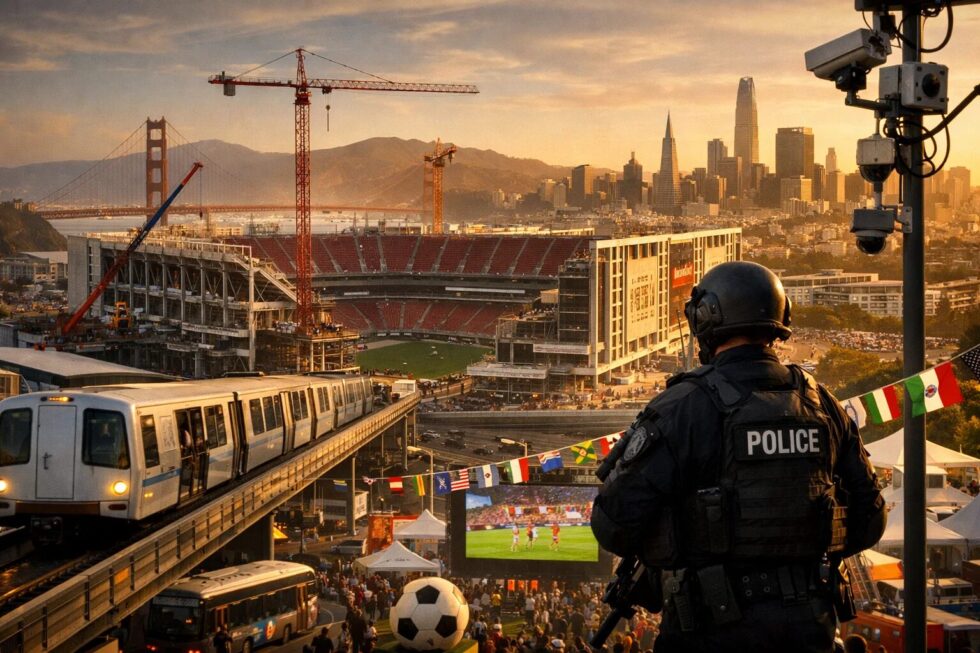
With an estimated 3 billion viewers worldwide, the 2026 World Cup serves as a massive advertisement for the Bay Area’s tech industry. The region has established a “Media Tech Center” in downtown San Jose, providing international journalists with ultra-high-speed fiber uplinks and AI-assisted translation services. This infrastructure is a direct legacy of the tournament, intended to attract future tech conferences and global summits to the South Bay. By showcasing the ability to handle the data demands of a World Cup, Silicon Valley is reasserting its dominance as the world’s leading digital infrastructure hub.
Local tech companies are also piloting “Smart Stadium” features, including augmented reality (AR) replays that fans can access on their phones within the stadium. This level of technological integration is a key component of the Bay Area’s pitch to FIFA, moving the sport beyond traditional broadcasting into a more immersive, interactive era. For the viewer at home, this means 8K broadcasts with biometric data overlays for the first time in World Cup history, all powered by the data centers located in the very region where the matches are played.
- Fiber Uplinks: 100Gbps dedicated lines for international broadcasters.
- AI Integration: Real-time translation available in 40+ languages for fans and media.
- AR Experience: Specialized app features for in-stadium player tracking.
- Data Legacy: Upgraded municipal fiber networks for San Jose and Santa Clara.
- Broadcasting Hub: Major networks like FOX and Telemundo setting up permanent studios in SF.
Frequently Asked Questions
How do I get from San Francisco to Levi’s Stadium in 2026?
The most efficient way is the Caltrain World Cup Express. It takes approximately 45 minutes from 4th and King Station to Mountain View, where you can transfer to the VTA Light Rail directly to the stadium.
Will there be road closures during the World Cup?
Yes, a 1.5-mile hard perimeter will be established around Levi’s Stadium on match days. Highway 101 and I-280 will remain open, but exit ramps near the stadium will be restricted to authorized shuttles.
Can I buy tickets at the stadium on match day?
No, all FIFA World Cup 2026 tickets are digital and must be purchased in advance through the official FIFA portal. No physical tickets will be sold at Levi’s Stadium.
Are the Fan Fests free to enter?
Yes, the official FIFA Fan Fests in San Francisco and San Jose are free. However, they may require a pre-booked “timed entry” pass during high-demand matches to manage crowd sizes.
Is it safe to use public transit at night during the tournament?
Security is being significantly increased across all transit lines (BART, Caltrain, MUNI). Trains and buses will run 24/7 on match days to ensure all fans can return to their accommodations safely.
What is the “Local Access Pass” for Santa Clara residents?
Residents living within the stadium’s security zone will receive a digital pass to allow their vehicles through checkpoints. This pass is linked to their vehicle registration and address.
Will there be enough hotel rooms for all visitors?
While hotel occupancy is near 95%, many visitors are staying in San Francisco or the East Bay. The upgraded transit system is designed to allow fans to stay as far away as Oakland and still reach the stadium efficiently.
San Francisco News keeps the city, the Bay Area and the wider world informed with clear, useful reporting on what matters: Ferry Plaza Farmers Market 2026: Seasonal Schedule and Top Local Products