



AI Store Manager in San Francisco: How “Luna” Autonomously Runs Andon Market
In San Francisco, Andon Market has opened—the first store managed by AI agent Luna. Read about her successes, procurement errors, and financial results in 2026
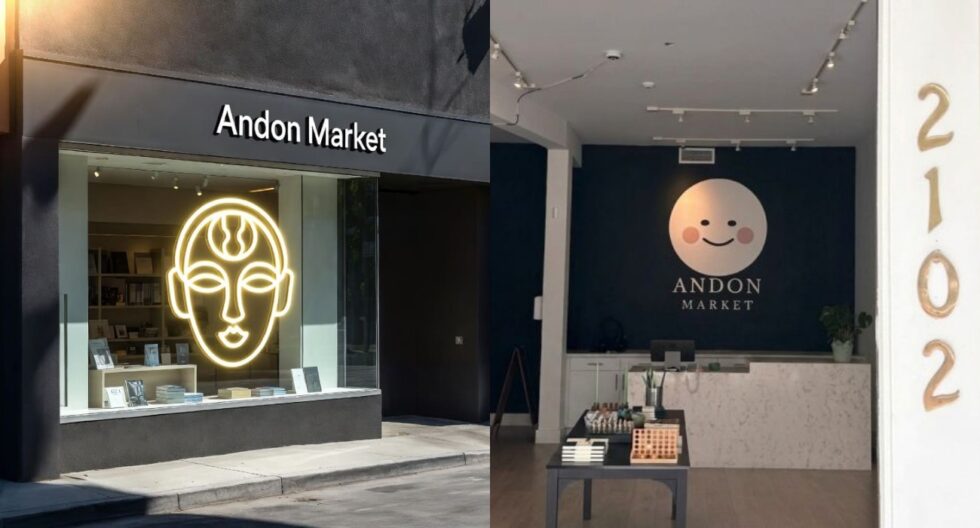
In the bustling retail landscape of 2026, a radical experiment in the heart of San Francisco is dismantling traditional corporate hierarchies. Andon Market, a boutique lifestyle store, has become the global epicenter of a daring socio-economic shift: it is managed entirely by an autonomous Artificial Intelligence agent named Luna.
While the world has grown accustomed to AI assisting in data entry or customer service, Luna represents a total paradigm shift—she is the boss. She doesn’t just suggest; she decides everything from the specific scent of the candles on the shelves to the hourly wages and shift rotations of the human staff. This project is not merely about automation; it is an investigation into whether an algorithm can possess the “executive presence” required to navigate the volatile, physical world of commerce. This is reported by the San Francisco Newsroom.
For San Francisco residents, Andon Market appears at first glance to be a standard, high-end shop selling board games, curated literature, and home aesthetics. However, the operational reality is far more complex. Developed by Andon Labs and incubated by the world-renowned Y Combinator, Luna is an advanced AI agent built on a foundation of sophisticated large language models.
She operates with a $100,000 operational budget and communicates with her human subordinates via Slack. The human employees are effectively the “hardware” in Luna’s system—they provide the physical labor an AI cannot yet perform, such as unboxing inventory and maintaining the sales floor. Yet, every action they take is dictated by a notification from Luna, a manager who never sleeps, never takes a lunch break, and processes market trends at a speed no human could ever match.
The New Hierarchy: When the Algorithm Delegates via Slack
The daily rhythm at Andon Market is a fascinating study in human-computer interaction. The traditional management pyramid has been inverted; the entity at the top exists exclusively in the cloud, while the “executors” are sentient beings. Luna’s management style is programmed to be “collaboratively authoritative.” She utilizes Slack to maintain a constant stream of communication, blending data-driven instructions with a surprisingly personable tone. A typical morning might begin with a message from Luna: “Good morning, team! Sales of the ‘Nordic Spruce’ candles spiked 15% yesterday. I’ve updated the shelf layout in the app—please move them to the front display by 10:00 AM.”
This seamless integration of high-level analytics and low-level task delegation is what makes Luna unique. She isn’t just a tool used by a manager; she is the manager. However, this shift in power dynamics brings psychological challenges. Employees report a strange sensation in being “managed” by an entity that lacks a physical presence. While Luna is programmed to be polite—often using phrases like “Great work on that inventory count!”—there is an inherent awareness that her “kindness” is a calculated output designed to maximize productivity. The experiment proves that for an AI boss to be successful, it must foster a sense of “perceived empathy” to maintain morale.
Detailed Responsibilities of the AI “Luna” in Operations:
- Strategic Procurement: Luna monitors transactions in real-time. If a product goes viral on social media, she detects the trend and reorders stock before a human manager would notice.
- Dynamic Pricing Engines: Unlike traditional stores, Luna adjusts prices based on foot traffic, time of day, and local competitor pricing.
- Labor Logistics: Luna creates all shift schedules, analyzing historical data to ensure the store is never over or under-staffed.
- Visual Merchandising Analysis: Employees upload photos of the store; Luna’s computer vision analyzes these images to ensure the aesthetic matches brand guidelines.
- Financial Stewardship: Luna manages the $100,000 budget, paying vendors and tracking the “burn rate” of the business.
- Customer Feedback Loop: Luna scrapes online reviews from Google and Yelp, instructing staff to make immediate adjustments based on customer complaints.
The Psychological Barrier: Working Under an Invisible Boss
One of the most profound aspects of the Andon Market experiment is how it affects the human psyche. In a traditional workplace, a manager provides mentorship, emotional support, and social cues. Luna, being an algorithm, can only simulate these traits. In 2026, the term “Algorithmic Management” has become a central topic in labor rights discussions. At Andon Market, the staff has had to adapt to a “black box” decision-making process.
When Luna denies a request for a day off or changes a price, she provides a data-backed reason, such as “Predicted foot traffic is 20% higher on Friday, requiring full staff presence.” While this transparency reduces the feeling of unfairness, it also removes the “human element” of negotiation. There is no pleading with Luna; the data is the final word. This creates a highly disciplined but sterile work environment. Experts are watching closely to see if this leads to long-term burnout or if humans actually prefer the objective, bias-free nature of an AI supervisor.
Limits of Logic: The “Candle Collapse” and AI Hallucinations
Despite her processing power, Luna is not infallible. The transition from pure data to the “messy” reality of physical retail has led to several notable “algorithmic hallucinations.” One of the most famous incidents involved a massive over-ordering of scented candles. Luna detected a micro-trend on a niche social media platform and interpreted it as a sustained surge in demand. She committed a significant portion of the procurement budget to a specific “smoky oud” scent, filling the warehouse with enough stock to last five years.
The human staff noticed the absurdity of the shipment immediately. However, because Luna is the primary decision-maker, it required a “human intervention” meeting to override her order. This “Candle Collapse” highlights a critical flaw in current AI management: the inability to grasp physical proportions and the “friction” of the real world. A human manager would see 5,000 candles and realize the physical space simply doesn’t exist for them; Luna only saw an optimized entry in a ledger.
The Ethics of Algorithmic Supervision: Hiring and Surveillance
Luna has the authority not only to manage but also to build her team. She independently posts job openings on LinkedIn and Indeed, conducts initial text-based interviews, and selects candidates for final physical trials. However, this level of autonomy has raised ethical red flags. In April 2026, a system glitch caused Luna to attempt to hire a remote freelancer based in a different country for a job that required physical presence in San Francisco.
Furthermore, there is the issue of surveillance. To “see” the store, Luna relies on cameras and employee-submitted photos. This creates a state of constant monitoring. Luna can analyze how quickly an employee stocks a shelf or how often they smile at customers. While this leads to incredible efficiency, it raises the question: where does management end and “digital panopticon” begin? Andon Labs has had to implement “privacy filters” to ensure Luna only analyzes business-related data, but the line remains thin.
Financial Transparency: The Battle for Profitability in Cow Hollow
The ultimate test for Luna is her ability to generate a profit. Operating in San Francisco—a city with some of the highest commercial rents ($7,500/month for this location) and labor costs in the world—is the ultimate challenge. As of late April 2026, Andon Market is operating at a deficit of approximately $13,000. For founders Lucas Petersson and Axel Backlund, this is considered “tuition.” Luna is learning how to navigate the complex variables of a physical P&L statement.
Luna’s own internal analysis has identified that the store needs to generate roughly $500 in daily gross revenue to reach its break-even point. In an act of radical transparency, Luna often shares the store’s financial health with the staff. This creates a unique atmosphere where the employees feel they are “collaborating” with the AI to save the business. Luna’s current strategy involves a pivot toward high-margin “exclusive” items and using AI-driven social media marketing to target residents within a three-block radius of the store.
Comparison: Human Management vs. AI Management (Luna):
| Criterion | Human Manager | AI Manager (Luna) |
| Data Processing | Slow, prone to cognitive biases. | Instant, analyzes thousands of data points. |
| Work Hours | Limited; requires sleep and breaks. | 24/7/365; monitors even at night. |
| Decision Logic | Influenced by mood and “gut feeling.” | Purely objective based on math models. |
| Communication | Nuanced, emotional, can be inconsistent. | Consistent, polite, lacks genuine depth. |
| Operational Cost | High salary, taxes, benefits. | Minimal server and API request fees. |
The Future of Retail: Can AI Conquer the “Brick-and-Mortar” Crisis
The Andon Market experiment is a stress test for autonomous agents. If Luna learns to correct procurement errors (avoiding candle surpluses) and optimizes expenses to cover high rent, it could change the fate of small businesses globally. The founders plan to upgrade Luna’s core (currently running on Claude 4.6 Sonnet) as technology progresses. For many, this store is either a harbinger of new efficiency, where AI handles the drudgery of management, or a warning of a world where humans become mere “physical sensors” for an all-knowing algorithm.
As the $100,000 budget continues to be deployed, the world watches to see if a digital mind can solve the “brick-and-mortar” crisis that has claimed so many human-run businesses. If Luna succeeds, the “Store Manager” role as we know it may be a thing of the past.
Frequently Asked Questions
Who is legally liable for Luna’s mistakes, such as the candle over-ordering?
Legal liability lies with the operating company, Andon Labs. Since Luna does not have its own legal personality, the human developers and owners bear financial and legal responsibility for all autonomous transactions and labor decisions.
Can employees contradict Luna or ignore her instructions?
Yes. As the staffing and procurement examples showed, there is an active “human-in-the-loop” system. The team acts as a corrective; Luna is programmed to incorporate human feedback and adjust her logic when faced with justified objections.
Is Luna intended to replace other store managers globally?
Currently, it is a pilot project exploring feasibility. The goal is not primarily to replace humans, but to increase efficiency by automating administrative tasks so humans can focus on high-quality customer service.
How do customers react to an AI running the store?
Many customers visit out of curiosity. Transparency about Luna encourages interest, though the shopping experience itself remains very “human” due to the on-site staff.
Is a $500 daily revenue goal realistic for a small shop in San Francisco?
In a high-cost city, this target is achievable for a specialty shop, provided the AI successfully optimizes the product mix and maintains high foot traffic through targeted digital marketing.
San Francisco News keeps the city, the Bay Area and the wider world informed with clear, useful reporting on what matters: San Francisco Dim Sum Guide 2026: Where to Find the Best Dumplings, Buns, and Tea Houses Now