



Moving to San Francisco in 2026: The Complete Relocation Guide
Moving to San Francisco in 2026? Discover housing costs, best neighborhoods, salaries, rental tips, transportation, safety, jobs and relocation advice for new residents.
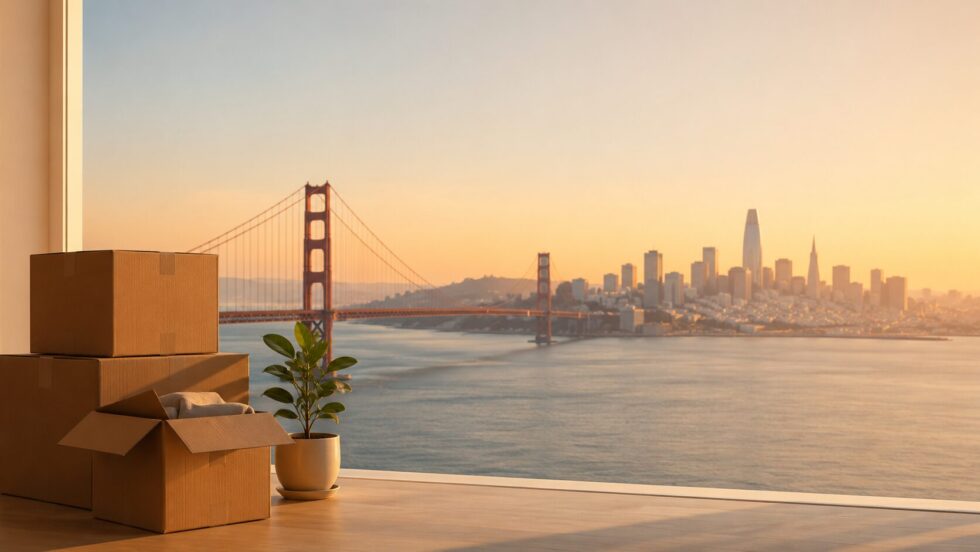
Is San Francisco right for you in 2026
San Francisco rewards a particular kind of person: someone who values walkability, culture, nature within arm’s reach, and career density over square footage and a cheap mortgage. Here is the honest trade-off.
- You’ll probably love it if you work in tech, design, biotech or climate; you want world-class food and the Pacific 20 minutes away; you’d rather not own a car.
- You might struggle if your budget is tight, you need a big home and a yard, or you dislike fog and chilly summer evenings.
The single biggest adjustment for newcomers isn’t the price — it’s the weather. “Summer” in San Francisco means layers, wind, and the famous June Gloom fog. Pack a jacket, not just a swimsuit.
What it really costs to move
Budget for three buckets: the move itself, the lease, and the first month of living. A cross-country move with a small truck and movers can run several thousand dollars; a local move is far less. The lease is where most people underestimate — California caps most security deposits at one month’s rent, but landlords still expect first month plus deposit, and competitive units move in days.
For the full line-by-line picture — groceries, utilities, transport, taxes — see our companion breakdown of the cost of living in San Francisco, and read why housing stays expensive despite new construction.
Where to live: choosing a neighborhood
San Francisco is a city of micro-climates and micro-cultures. The Sunset and Richmond are foggier, quieter and (relatively) more affordable; the Mission is sunny and lively; Hayes Valley and Noe Valley are central and family-friendly; SoMa puts you next to the office towers. There is no single “best” area — only the best match for your budget, commute and temperament.
We compare vibe, rent and commute side by side in our guide to the best San Francisco neighborhoods for newcomers. Skim it before you commit to a lease in a part of town you’ve only seen in photos.
How to find an apartment without getting burned
Rental scams are the number-one trap for people who haven’t arrived yet. The rule is simple: never wire money for a place you haven’t seen in person or via a verified video tour, and never pay before a signed lease. Have your application packet ready — proof of income, credit report, references and ID — so you can move the day you find the right unit.
- Search reputable platforms and neighborhood channels; cross-check the address and price.
- Tour in person where possible; ask about utilities, laundry and rent-control status.
- Confirm the deposit is within California’s legal limit before you sign.
Our step-by-step playbook on how to find an apartment in San Francisco covers the documents landlords expect and the red flags that signal a scam.
Your first 30 days: the admin checklist
Once you have keys, a short list of errands turns “visitor” into “resident.” Tackle them in roughly this order.
Every one of these — the California ID, certificates, voter registration and more — is mapped, with official links, in our guide to essential documents in San Francisco. The DMV’s own requirements live at dmv.ca.gov, and the city’s services hub is sf.gov.
Getting around without a car
Most San Franciscans don’t need a car, and parking is expensive and tightly regulated. Muni buses, the Metro, BART, ferries and a growing bike network cover the city and the wider Bay Area. A single tap of a Clipper card handles fares across systems; check routes and current prices on SFMTA. We break down every option in getting around San Francisco without a car.
Newcomer mistakes to avoid
- Underestimating the weather and arriving without warm layers.
- Signing a lease sight-unseen and falling for a deposit scam.
- Bringing a car you’ll rarely use but always pay to park.
- Skipping the DMV appointment and waiting weeks for a walk-in slot.