



Night events San Francisco May 2026: parties, rooftops, live music and late-night hotspots
Night events San Francisco May 2026 include rooftop parties, live music venues, techno clubs, jazz bars and waterfront nightlife across SoMa, Mission and Downtown.
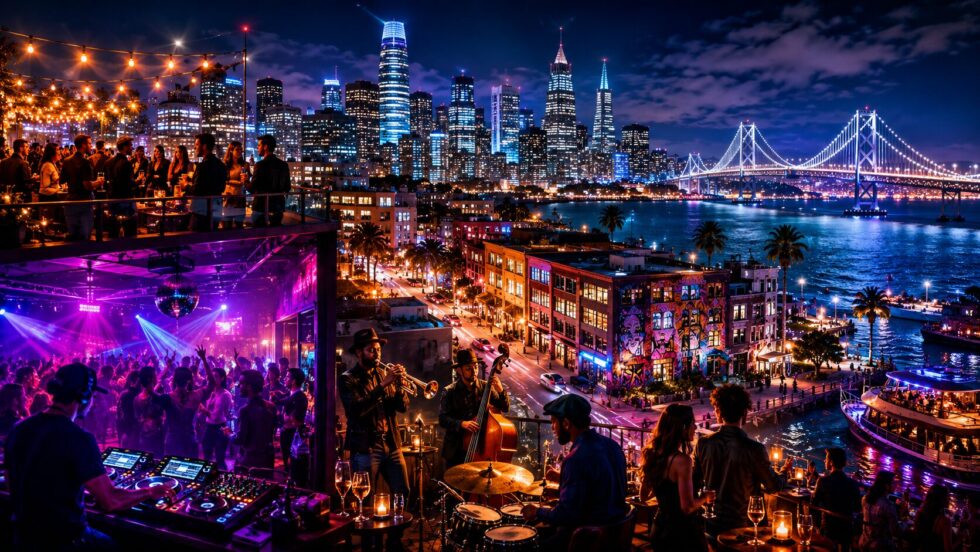
Night events San Francisco May 2026 are once again driving nightlife traffic across SoMa, Mission District, Downtown and the waterfront as clubs, rooftop venues and live music halls enter one of the busiest spring periods before the summer festival season officially begins. From warehouse-style electronic parties at venues near Mission Bay to jazz lounges around Union Square and packed concert calendars at legacy halls including The Fillmore and The Regency Ballroom, the city is seeing strong late-night demand fueled by tourism, conference traffic, university crowds and Bay Area festival movement, reported in coverage reviewed by San Francisco Newsroom. Multiple nightlife calendars across San Francisco show a sharp increase in May ticket activity tied to DJs, after-parties, rooftop events and themed nightlife experiences.
What separates San Francisco nightlife in May 2026 from winter is the concentration of outdoor and hybrid venues operating simultaneously. Rooftop lounges around SoMa are extending opening hours during warm weekends, electronic venues are combining terrace spaces with indoor warehouse rooms, and jazz, indie and comedy programming is spilling across neighborhoods almost every night of the week. The broader Bay Area events ecosystem — including BottleRock Napa Valley, Bay to Breakers, waterfront concerts and festival afterparties — is also pushing nightlife traffic deeper into the city during May weekends.
Why San Francisco nightlife becomes significantly busier in May
May traditionally marks the transition between conference-heavy winter nightlife and the high-tourism summer calendar in Northern California. Weather conditions improve, sunset hours become longer and more visitors begin staying in Downtown and waterfront hotels before major summer travel peaks arrive. In 2026, nightlife operators are also benefiting from the recovery of international tourism and the return of larger event programming throughout the Bay Area.
At the same time, several recurring San Francisco spring events are generating secondary nightlife demand. Bay to Breakers weekend alone brought tens of thousands of participants into the city in mid-May, increasing movement toward bars, rooftop lounges and music venues after the race ended.
Another factor is venue diversification. San Francisco nightlife is no longer centered only around traditional clubs. Restaurants now transform into DJ spaces after dinner service, rooftop cocktail venues host curated electronic sets, and hotel bars increasingly compete with standalone nightlife operators. This hybrid model particularly attracts visitors aged 28 to 45 who are looking for music-driven nightlife without entering large-scale mega clubs.
Main nightlife zones attracting traffic in May 2026
| Area | Main nightlife style | Peak hours | Typical audience |
|---|---|---|---|
| SoMa | Techno, warehouse parties, rooftop clubs | 11 PM – 3 AM | Tech, tourists, festival crowd |
| Mission District | Indie music, cocktails, smaller venues | 8 PM – 1 AM | Creative and local crowd |
| Union Square | Jazz lounges, hotel rooftops | 7 PM – midnight | Visitors and business travelers |
| Mission Bay | Large events, festival afterparties | 10 PM – 2 AM | Younger nightlife audience |
| North Beach | Bars, live bands, late dining | 8 PM – 2 AM | Mixed local-tourist crowd |
The Midway remains one of the biggest electronic nightlife hubs
The Midway continues to dominate large-format nightlife programming in San Francisco during May 2026 thanks to its combination of indoor halls, outdoor areas and festival-scale production infrastructure. The venue’s May schedule includes electronic events, brunch parties, terrace programming and touring DJ acts that attract both local and international audiences.
What makes The Midway important in the current nightlife ecosystem is flexibility. Unlike traditional clubs limited to a dancefloor, the venue can scale between daytime electronic events and full late-night warehouse experiences. Organizers are increasingly using multi-room concepts, where different genres operate simultaneously in connected spaces.
The venue also benefits from geography. Located near Mission Bay and major transit corridors, it attracts crowds coming from downtown hotels, Oracle Park events and Bay Area festival traffic. During large weekends, rideshare pricing around the venue often spikes significantly after midnight.
Industry analysts tracking West Coast nightlife trends note that hybrid outdoor-indoor venues are outperforming traditional nightclub models because visitors increasingly prioritize atmosphere and flexibility over pure dancefloor capacity.
What visitors should know before going
- Most electronic events are 21+
- Peak entry queues usually begin after 11 PM
- VIP and fast-track tickets increasingly sell out early on weekends
- Rideshare demand around Mission Bay rises sharply after closing
- Outdoor terrace programming depends on weather conditions
1015 Folsom continues to dominate late-night club culture
Among dedicated nightclubs, 1015 Folsom remains one of the strongest brands in San Francisco nightlife. The venue maintains a reputation for electronic programming, techno bookings, bass music and touring underground acts. Listings for May 2026 continue to show regular weekend events with extended operating hours.
Unlike upscale rooftop venues, 1015 Folsom still represents the classic dense urban nightclub model: loud sound systems, darker rooms, heavy lighting production and dance-oriented audiences. The venue’s strength lies in consistency. Touring DJs frequently include San Francisco stops there because the club already has infrastructure designed specifically for electronic music performance.
Crowds at 1015 Folsom often become busiest between midnight and 1 AM, later than cocktail-focused venues elsewhere in the city. Friday programming generally skews more mainstream electronic, while Saturdays increasingly attract harder techno and underground audiences.
A nightlife manager quoted by local Bay Area media previously described the current market shift this way:
“People are going out later again, but they expect stronger programming and better production.” (Bay Area nightlife operator cited in regional entertainment reporting)
That trend is visible across SoMa, where audiences increasingly compare clubs not only on drinks or pricing, but also on lighting, visual installations and artist bookings.
The Fillmore remains central to live music culture
Live music continues to be one of the strongest nightlife sectors in San Francisco during May 2026. Among historic venues, The Fillmore remains one of the city’s most recognizable concert destinations with touring acts performing throughout the month. Listings include rock, indie, punk and alternative concerts drawing both locals and visitors.
The venue’s cultural weight matters beyond ticket sales. For decades, The Fillmore has represented a bridge between San Francisco’s historical music identity and its current entertainment economy. Touring musicians still reference the venue as an important stop because of its legacy connected to the city’s rock and counterculture history.
May 2026 programming reflects broader shifts in the American concert market. Mid-size halls are seeing strong attendance because audiences increasingly prefer intimate concert environments over stadium-scale events. San Francisco benefits from this trend because many venues sit within walkable nightlife districts filled with bars and restaurants.
Concert-driven nightlife spending in May 2026
| Venue type | Average ticket range | Typical spending nearby |
|---|---|---|
| Indie concerts | $35–$90 | Cocktails, dining, rideshare |
| Electronic events | $40–$120 | Drinks, afterparties |
| Rooftop DJ events | $25–$80 | Premium cocktails |
| Jazz lounges | $20–$60 | Dining and wine |
| Comedy venues | $30–$75 | Bar tabs and late dining |
Rooftop nightlife is reshaping evening culture across Downtown San Francisco
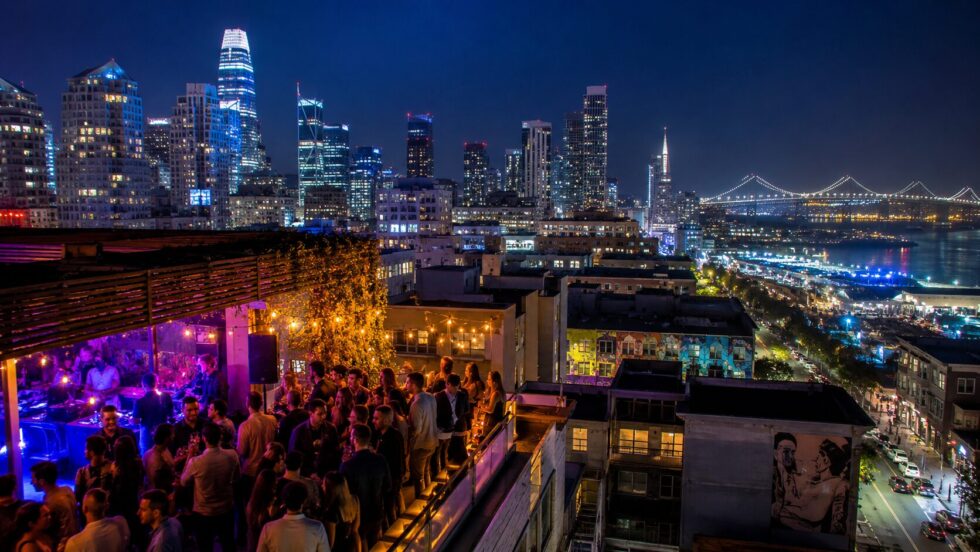
Rooftop nightlife has become one of the fastest-growing segments of San Francisco evening culture. In May 2026, venues near SoMa, Yerba Buena and Union Square are benefiting from warmer evening conditions and stronger tourism flows.
Unlike New York or Miami, San Francisco rooftops traditionally focused more on lounges than high-energy nightlife. That distinction is beginning to blur. DJs, electronic sunset sessions and curated nightlife programming are now common across hotel rooftops and private terraces.
Several operators are also redesigning menus and layouts around social-media-driven nightlife behavior. Open-air lighting, skyline views and visual aesthetics increasingly influence venue popularity as much as music programming itself.
The rooftop trend is particularly visible among visitors arriving for conferences and technology events, where networking increasingly extends into nightlife spaces rather than formal corporate venues.
Rooftop trends visible in May 2026
- Earlier evening start times
- More sunset DJ programming
- Smaller reservation-based experiences
- Higher cocktail pricing
- Increased security and guest-list systems
The Regency Ballroom keeps attracting touring electronic and alternative acts
The Regency Ballroom continues to operate as one of the city’s most flexible mid-size music venues. May 2026 schedules include electronic artists, indie performers and crossover touring acts.
One reason venues like Regency remain competitive is acoustics and scale. They are large enough to host major touring acts but still preserve a club-like energy that arena concerts cannot replicate. Audiences increasingly prefer these experiences because they feel more connected to artists and less corporate.
The surrounding neighborhood also contributes to nightlife traffic. Visitors often combine concerts with hotel bars, late-night restaurants or additional afterparty venues around Polk Street and Downtown.
Mission District nightlife remains more local and less corporate
While SoMa dominates large electronic nightlife, the Mission District continues to attract audiences searching for smaller venues, independent music programming and cocktail-driven evening culture.
The area’s nightlife identity depends less on mega-events and more on atmosphere. Indie bars, intimate live music halls and hybrid restaurant-lounge concepts dominate the neighborhood. Compared with Downtown, crowds in the Mission generally arrive earlier and spend more time socializing rather than moving between venues rapidly.
This also makes the district attractive for visitors avoiding the highest nightlife pricing. Cover charges are often lower than in larger clubs, and venues tend to emphasize music discovery rather than celebrity-driven events.
Popular nightlife formats in the Mission
- Vinyl DJ nights
- Indie concerts
- Jazz cocktail lounges
- Experimental electronic events
- Late-night dining with live music
Festival traffic is pushing Bay Area nightlife into San Francisco clubs
May 2026 is not operating in isolation. Regional festivals are feeding directly into city nightlife demand. BottleRock Napa Valley, waterfront concerts, comedy festivals and Bay Area cultural events are generating additional hotel occupancy and nightlife traffic.
This matters economically because nightlife spending extends beyond ticket sales. Transportation, hospitality, food service and short-term lodging all benefit from major nightlife weekends. Industry analysts increasingly classify nightlife as part of the broader urban tourism economy rather than a standalone entertainment category.
San Francisco operators are also adapting to changing customer expectations. Visitors increasingly search for “experience stacks” — combining dinner, rooftop cocktails, live music and afterparties within one evening rather than staying in a single venue.
Safety, transportation and late-night logistics in May 2026
Transportation remains one of the biggest operational challenges during major nightlife weekends. Bay to Breakers closures already demonstrated how quickly city mobility can shift during large-scale events.
For nightlife visitors, rideshare surge pricing remains common after midnight, especially around SoMa and Mission Bay. Some venues are now encouraging earlier arrivals through ticket incentives or reserved-entry systems.
Visitors should also note that San Francisco nightlife geography can change quickly between blocks. A venue may sit next to highly active nightlife zones while nearby streets remain significantly quieter late at night.
Practical nightlife planning tips
| Situation | Recommendation |
|---|---|
| Weekend rooftop events | Reserve early online |
| Large electronic parties | Arrive before 11 PM |
| Concert nights | Check transit changes |
| Festival weekends | Expect hotel price increases |
| Late rideshare demand | Compare pickup zones |
Live music, rooftops and hybrid nightlife are now defining San Francisco evenings
Night events San Francisco May 2026 show a nightlife market that is becoming more diversified rather than returning to older pre-pandemic patterns. Warehouse clubs remain important, but rooftops, hybrid lounges, live music halls and festival-linked nightlife experiences are increasingly shaping how audiences move through the city after dark.
The strongest venues are no longer relying only on alcohol sales or famous DJs. Atmosphere, outdoor space, curated programming and neighborhood identity now play equally important roles. That evolution is particularly visible in SoMa, Mission District and the waterfront nightlife corridor.
At the same time, San Francisco continues to compete with Los Angeles, Las Vegas and Miami for event tourism. The city’s advantage remains density: visitors can combine concerts, rooftops, late-night food and club events within relatively compact districts.
For May 2026, the result is one of the busiest nightlife calendars the city has seen since before the pandemic — especially during weekends connected to concerts, regional festivals and major public events.
Audio nightclub keeps redefining high-end electronic nightlife in SoMa
Audio nightclub has positioned itself as one of the most technically advanced venues in San Francisco nightlife, especially for visitors specifically searching for premium electronic music experiences in May 2026. Located in SoMa, the club is known for its Funktion-One sound system, a benchmark standard in global electronic music venues, and for hosting internationally touring DJs across house and techno genres. Its programming strategy differs from broader-format venues by focusing on sound quality, artist curation and immersive lighting rather than multi-room scale. This approach continues to attract a more specialized audience segment that prioritizes music over spectacle. Entry patterns show that the venue typically fills later than rooftops, with peak density occurring between 12:30 AM and 2:00 AM. Unlike hybrid venues, Audio maintains a strict club identity, which reinforces its brand among electronic music followers.
The club’s operational model also reflects wider industry trends: fewer events but higher production value per night. Promoters are increasingly investing in sound engineering, stage design and visual installations to differentiate from competitors. In May 2026, this strategy appears to be working, particularly among visitors attending festival afterparties or traveling specifically for DJ-driven nightlife.
What defines Audio compared to other clubs
- High-end sound system focus
- International DJ bookings
- Dark-room, immersive lighting design
- Late-night peak hours
- Strong reputation among electronic music audiences
Temple Nightclub blends mainstream and electronic nightlife audiences
Temple Nightclub operates as a multi-level venue designed to capture a broader nightlife audience compared to niche electronic clubs. Located in SoMa, it integrates multiple rooms with different music formats — including EDM, hip-hop and commercial dance music — allowing it to appeal to both tourists and local nightlife consumers.
This hybrid programming model is particularly effective in May, when mixed crowds enter the city due to conferences, events and weekend tourism. Temple’s advantage lies in its ability to offer different experiences within a single venue, reducing the need for guests to move between locations. The club also invests heavily in lighting technology, LED installations and visual effects, aligning with global nightlife trends toward immersive environments.
From a commercial perspective, Temple represents a scalable nightlife model: high capacity, diversified programming and strong bar revenue. This contrasts with smaller venues that rely more heavily on ticket sales and niche audiences. In May 2026, this structure allows Temple to maintain consistent attendance across weekdays and weekends.
Temple Nightclub operational breakdown
| Feature | Description |
|---|---|
| Floors | Multi-room layout |
| Music | EDM, hip-hop, commercial |
| Audience | Mixed (tourists + locals) |
| Peak time | 11:30 PM – 2 AM |
| Format | High-capacity nightlife |
Madrone Art Bar anchors live funk, soul and DJ culture in the city
Madrone Art Bar in the NOPA district offers a distinctly different nightlife format compared to SoMa clubs. Instead of large-scale electronic events, the venue focuses on live music, DJ sets, themed dance nights and a strong local community atmosphere. Its programming in May 2026 includes funk, soul, hip-hop and vinyl-driven DJ sessions.
What differentiates Madrone is its accessibility and cultural positioning. Entry is often more affordable than larger venues, and the crowd tends to include a higher proportion of locals rather than short-term visitors. This creates a more stable nightlife environment that does not rely on seasonal tourism peaks.
The venue also reflects a broader shift toward experience-based nightlife rather than purely consumption-based models. Visitors come for music discovery, dancing and social interaction rather than headline DJs or large-scale production. This model is increasingly relevant as parts of the nightlife audience move away from high-cost, high-intensity club environments.
Charmaine’s Rooftop Bar defines premium rooftop nightlife in Downtown
Charmaine’s Rooftop Bar has become one of the most recognizable rooftop venues in San Francisco nightlife, particularly for visitors searching for skyline views combined with evening DJ programming. Located above the Proper Hotel, the venue offers a curated environment that blends cocktail culture with light nightlife elements.
In May 2026, rooftop demand continues to rise, and Charmaine’s is benefiting from early evening traffic as well as late-night reservations. Unlike traditional clubs, the venue operates on a reservation-heavy model, with capacity management and guest-list systems playing a central role in access.
Pricing reflects its positioning. Cocktails are typically higher than city averages, but guests are paying for environment, location and exclusivity rather than music programming alone. The venue’s success illustrates how rooftop nightlife has evolved into a premium category within the broader San Francisco market.
Rooftop venues like Charmaine’s are increasingly competing not only with clubs but also with high-end restaurants and hotel bars, creating a hybrid nightlife segment.
Rooftop nightlife comparison
| Venue type | Price level | Experience |
|---|---|---|
| Rooftop bars | High | Views, cocktails, social |
| Clubs | Medium–high | Music, dancing |
| Live venues | Medium | Performance-focused |
| Bars | Low–medium | Casual nightlife |
SFJAZZ Center keeps jazz nightlife relevant in modern San Francisco
SFJAZZ Center continues to operate as one of the most important live music institutions in the city, offering evening concerts that attract both dedicated jazz audiences and broader cultural visitors. May 2026 programming includes international performers, themed jazz nights and collaborative performances.
Unlike clubs, SFJAZZ represents a structured nightlife experience. Events start earlier, seating is organized, and audiences engage more as listeners than participants. However, these events often feed into broader nightlife activity, with visitors continuing to bars or lounges after performances.
The venue also reflects San Francisco’s cultural depth. While electronic and commercial nightlife dominates search traffic, jazz and live performance venues remain critical for diversifying the city’s evening economy. This dual structure allows San Francisco to compete across multiple nightlife segments simultaneously.
Public Works remains central to underground electronic culture
Public Works has maintained its position as one of the key underground electronic venues in San Francisco. Located in the Mission District, the club focuses on house, techno and community-driven nightlife events, often linked to local collectives and independent promoters.
In May 2026, underground nightlife continues to grow as a counterbalance to mainstream club culture. Audiences are increasingly seeking authenticity, smaller dancefloors and curated music experiences rather than high-capacity venues. Public Works benefits directly from this shift.
The venue also operates under a community-first model, emphasizing inclusivity, safer nightlife practices and diverse programming. This aligns with broader cultural trends across major cities, where nightlife is increasingly tied to identity, community and creative expression rather than purely commercial entertainment.
Underground vs mainstream nightlife
- Underground: smaller venues, curated music, local audiences
- Mainstream: large clubs, commercial DJs, high capacity
- Hybrid: rooftops, lounges, mixed programming
- Live music: concerts, structured performances
- Cultural venues: jazz, experimental formats
How pricing, demand and behavior are shifting nightlife economics
Night events San Francisco May 2026 are also reflecting structural changes in nightlife economics. Pricing has increased across nearly all categories, from club entry fees to cocktails and rideshare costs. This is partly driven by inflation but also by changes in demand patterns.
Visitors are now more selective. Instead of attending multiple venues in one night, many are choosing one primary destination and spending more within that space. This behavior benefits venues offering complete experiences — music, drinks, atmosphere and social interaction — within a single location.
Another shift is pre-planning. Ticket pre-sales, reservation systems and digital guest lists are becoming standard, reducing spontaneous nightlife decisions. For operators, this creates more predictable revenue streams but also increases competition for early bookings.
Final patterns shaping San Francisco nightlife in May 2026
San Francisco nightlife in May 2026 is no longer defined by a single dominant format. Instead, it operates as a layered ecosystem where different venue types serve different audiences simultaneously. Large-scale electronic clubs, premium rooftops, live music halls and underground spaces all coexist and compete.
The strongest growth is visible in hybrid formats — venues that combine multiple elements such as music, social space and visual design. At the same time, legacy institutions like The Fillmore and SFJAZZ continue to anchor the city’s cultural identity.
For visitors and residents, the result is a nightlife landscape that requires more planning but offers more variety than in previous years. The balance between scale, quality and experience is now the defining factor in where people choose to go — and how they spend their nights across San Francisco.
San Francisco News keeps the city, the Bay Area and the wider world informed with clear, useful reporting on what matters: Rose Pizzeria San Francisco opening draws thousands to Inner Richmond