



Why Is San Francisco Real Estate Surging Again as AI Wealth Reshapes the Housing Market in 2026
San Francisco real estate is rising again in 2026 as AI wealth, luxury demand, office recovery and low housing supply reshape prices, rents, investment flows and Bay Area development.
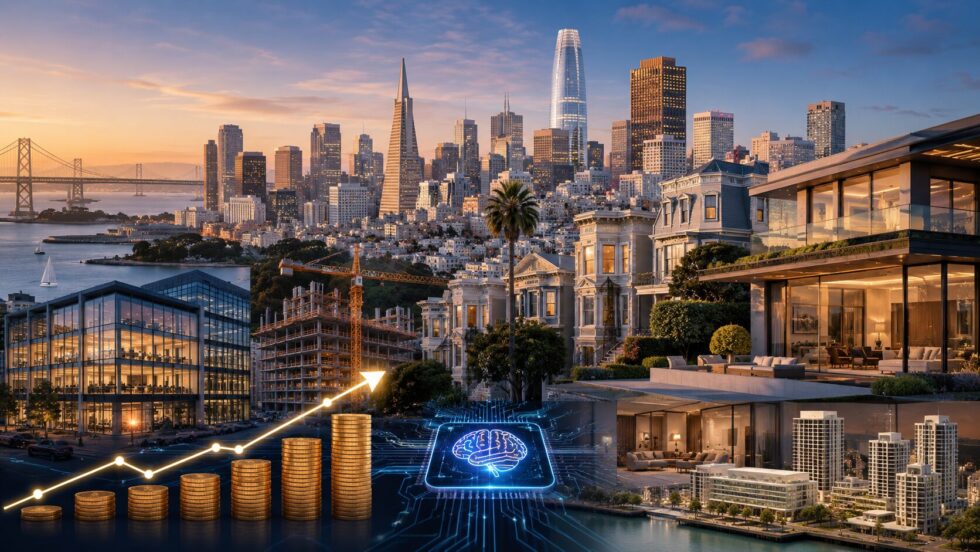
San Francisco real estate is moving back into expansion territory in 2026 after several years marked by technology layoffs, falling office occupancy, investor caution and a sharp slowdown in residential transaction volume across the Bay Area. The market is now being reshaped by a powerful mix of artificial intelligence capital, renewed luxury housing demand, historically constrained inventory, stabilising mortgage expectations and the gradual return of highly paid technology professionals into core urban districts including Mission Bay, Pacific Heights, Hayes Valley and parts of SoMa. Median pricing in several premium neighbourhoods has started rising again as inventory remains structurally limited, while competition for renovated single-family homes and architect-designed properties has intensified among buyers connected to AI startups, venture capital firms and biotechnology companies.
Unlike the broad post-pandemic rebound seen in 2021, the current recovery cycle is narrower, more selective and significantly more tied to AI-driven wealth concentration. The strongest growth is concentrated around luxury assets, Class A office corridors and districts connected to advanced technology infrastructure, while older condo-heavy zones and parts of downtown San Francisco continue facing vacancy pressure, refinancing risks and weaker investor confidence. Office leasing activity from artificial intelligence firms has also started supporting commercial sentiment after years of contraction, particularly in premium buildings capable of handling high-density engineering operations and hybrid workplace models.
Analysts increasingly describe the city as entering a “two-speed property economy” where elite neighbourhoods linked to AI capital recover rapidly while secondary segments remain exposed to affordability stress, refinancing pressure and uneven demand dynamics, local San Francisco Newsroom editors report, with additional market analysis and Bay Area property trend reporting referenced by Goldmetr real estate news.
AI capital is reshaping the geography of housing demand
Artificial intelligence investment has become one of the most important forces influencing the San Francisco housing market in 2026. The concentration of AI companies in the Bay Area has generated a new category of high-income buyers whose compensation structures increasingly resemble the pre-IPO wealth creation patterns that characterised earlier Silicon Valley cycles.
The strongest demand is currently concentrated in areas with direct proximity to AI firms, venture capital ecosystems and high-end urban infrastructure. Mission Bay, Dogpatch, Pacific Heights, Noe Valley and parts of Hayes Valley are seeing renewed competition from buyers connected to technology startups, infrastructure funds and AI engineering teams. These districts combine walkability, modern housing stock and relative access to offices, private schools and transport infrastructure.
Unlike previous cycles dominated by speculative foreign investment, the 2026 rebound is being driven largely by domestic capital tied directly to operating businesses. Buyers are less dependent on leverage than during earlier market expansions, with a large percentage of luxury transactions involving significant cash components. This has reduced sensitivity to mortgage volatility and allowed premium prices to stabilise faster than analysts expected.
Several characteristics define the current AI-driven housing cycle:
- Increased demand for larger hybrid-work residences
- Strong growth in luxury home purchases above $5 million
- Rising interest in neighbourhoods near biotech campuses
- Renewed demand for architect-designed homes
- Preference for premium low-density districts over towers
- Greater interest in long-term capital preservation assets
The shift is particularly visible in luxury inventory absorption. Homes that remained unsold during 2023 and 2024 are now returning to competitive bidding environments, especially if they combine privacy, outdoor space and proximity to major technology corridors.
Why inventory shortages are becoming a critical market driver
Housing supply remains one of the defining structural problems across San Francisco in 2026. Despite political pressure to increase construction, the city continues to face significant constraints linked to zoning complexity, approval delays, construction costs and infrastructure limitations.
The inventory shortage is most severe in the single-family housing segment. Many homeowners refinanced during the ultra-low interest-rate environment of 2020–2021 and remain reluctant to sell properties carrying historically cheap mortgage rates. This “rate lock” effect has sharply reduced available listings, particularly in premium residential districts.
The result is an increasingly fragmented market:
| Segment | Market Condition 2026 | Key Trend |
|---|---|---|
| Luxury homes | Strong demand | Prices rising |
| Single-family homes | Low inventory | Competitive offers |
| Downtown condos | Uneven recovery | Selective demand |
| Multifamily rentals | Improving | Vacancy stabilising |
| Older office buildings | Weak | Conversion pressure |
| Biotech-linked districts | Expanding | Strong investor interest |
Construction economics have also become more difficult. Labour costs, insurance expenses, financing rates and material prices remain elevated compared with pre-pandemic levels. Many developers have postponed projects because projected rental income no longer justifies total development costs under current financing conditions.
At the same time, political resistance to high-density construction remains a major factor. Neighbourhood groups continue challenging major redevelopment plans, slowing the pace of approvals and extending delivery timelines for large residential projects.

This imbalance between demand and supply is one reason analysts increasingly believe San Francisco may re-enter a prolonged undersupplied cycle despite population volatility seen earlier in the decade.
Luxury real estate is outperforming the broader market
The strongest segment of the San Francisco housing market in 2026 is luxury real estate. High-net-worth buyers connected to AI, venture capital, biotech and finance are driving renewed momentum in premium properties, especially homes with architectural distinction and prime locations.
Luxury buyers in 2026 differ significantly from those during earlier technology booms. Many are prioritising long-term lifestyle assets rather than rapid speculative gains. There is stronger emphasis on security, privacy, wellness infrastructure and property quality rather than pure square footage.
The most competitive luxury districts include:
- Pacific Heights
- Presidio Heights
- Russian Hill
- Sea Cliff
- Noe Valley
- Hillsborough
- Atherton
- Belvedere
Properties with panoramic Bay views, integrated smart-home systems, outdoor wellness spaces and premium construction standards are attracting significant attention from domestic and international buyers.
Another major trend is the growing demand for “legacy assets” — properties expected to preserve long-term value through scarcity rather than speculative appreciation. Waterfront homes, architecturally protected residences and historically important properties are increasingly viewed as defensive investments during periods of economic uncertainty.
Luxury rental markets are also strengthening. Executives relocating temporarily for AI projects are generating demand for furnished premium rentals, especially in districts close to venture capital and technology hubs.
The office market is recovering unevenly across San Francisco
Commercial real estate remains one of the most complicated sectors of the Bay Area economy. Although office vacancy rates remain elevated compared with pre-2020 levels, 2026 is showing the first signs of stabilisation in premium office categories.
The strongest recovery is occurring in Class A properties capable of supporting high-density AI infrastructure and collaborative engineering teams. Buildings with advanced ventilation systems, modern sustainability standards and flexible layouts are outperforming older inventory.
Several trends are shaping the office recovery:
| Trend | Impact |
|---|---|
| AI company expansion | Increased leasing activity |
| Hybrid work | Lower space efficiency |
| Older office stock | Declining valuations |
| Premium office demand | Recovery in Class A assets |
| Office conversions | Growing redevelopment interest |
| Venture capital growth | Stronger startup leasing |
Downtown San Francisco still faces major structural challenges. Older office towers built for traditional finance and legal tenants remain under pressure, especially where retrofitting costs are extremely high.
However, some investors now see opportunity in distressed office acquisitions. The possibility of converting underperforming buildings into residential or mixed-use projects has become a major area of interest among private equity groups and infrastructure investors.
The city government is also attempting to encourage redevelopment through zoning reforms, tax incentives and adaptive reuse programmes aimed at revitalising struggling commercial corridors.
Multifamily housing is attracting institutional investors again
Multifamily real estate is gradually regaining institutional interest across the Bay Area in 2026. Rental demand has stabilised after earlier outflows, and several districts are experiencing moderate rent growth once again.
Investors increasingly believe San Francisco’s rental market benefits from long-term structural advantages:
- High barriers to housing construction
- Strong graduate talent inflows
- Limited land availability
- Expanding AI employment base
- Persistent international demand
- Relative wage strength
The strongest multifamily performance is occurring in neighbourhoods linked to technology and life-sciences employment. Mission Bay and South San Francisco continue benefiting from biotech expansion, while districts near transport infrastructure remain attractive for younger professionals.
At the same time, investors remain cautious regarding regulation. Rent-control policies, eviction protections and operational compliance requirements continue influencing acquisition strategies.
Many institutional groups are therefore focusing on newer buildings with fewer regulatory complications rather than older housing stock exposed to stronger tenant protections.
Capital flows into multifamily assets remain selective, but compared with 2023 and 2024, investor sentiment has improved considerably.
Mortgage conditions are changing buyer behaviour
Mortgage rates remain significantly higher than during the pandemic-era housing surge, but buyers are increasingly adapting to the new financing environment.
Rather than waiting for dramatic rate reductions, many buyers now accept that structurally low rates may not return soon. This psychological adjustment is becoming an important market catalyst.
The financing environment is influencing purchasing behaviour in several ways:
- More buyers are increasing down payments
- Adjustable-rate products are becoming more common
- Wealthier buyers rely less on financing
- Renovation loans are rising
- Buyers prioritise long-term ownership stability
The effect is particularly visible in luxury markets, where financing sensitivity is lower. Premium properties remain active despite elevated rates because buyers often have substantial liquidity from technology equity or investment portfolios.
Middle-market buyers, however, continue facing affordability pressure. The combination of high home prices, elevated rates and strict lending standards keeps entry barriers extremely high for first-time purchasers.
This divergence between affluent and middle-income buyers is widening inequality across the housing market and reinforcing segmentation between ownership classes.
Downtown San Francisco remains the biggest uncertainty
Despite improving conditions in selected districts, downtown San Francisco remains one of the largest unresolved challenges in the city’s real estate landscape.
The pandemic fundamentally altered office utilisation patterns, retail traffic and tourism dynamics. Although AI-related leasing activity has improved sentiment, many downtown corridors still experience lower foot traffic compared with pre-pandemic conditions.
Several structural problems continue affecting downtown:
| Challenge | Effect |
|---|---|
| High office vacancy | Falling commercial valuations |
| Reduced retail traffic | Business closures |
| Public safety concerns | Lower consumer confidence |
| Remote work | Lower commuter density |
| Financing pressure | Distressed asset risk |
| Infrastructure costs | Fiscal pressure on city budgets |
Nevertheless, some investors believe downtown distress may eventually create long-term opportunity. Distressed valuations, conversion potential and future transit-oriented redevelopment could attract major capital over the next decade.
Urban planners are increasingly discussing mixed-use transformation strategies involving housing, education, healthcare and entertainment rather than pure office dependence.
Whether downtown can successfully transition into a diversified urban ecosystem will likely determine the long-term trajectory of San Francisco’s commercial property market.
Why foreign investors are watching San Francisco again
International investors are slowly returning to San Francisco real estate after several years of caution linked to remote work trends, taxation concerns and political uncertainty.
Several factors are attracting renewed interest:
- AI dominance of the Bay Area economy
- Dollar-denominated asset security
- Limited global supply of elite technology hubs
- Long-term scarcity of land
- Strong university ecosystems
- Relative legal stability
Buyers from Asia, the Middle East and Europe are particularly focused on trophy residential assets and long-term commercial redevelopment opportunities.
Some sovereign wealth funds and international family offices increasingly view San Francisco as a strategic long-duration asset tied directly to artificial intelligence infrastructure growth.
This perspective differs from earlier cycles dominated by speculative condominium purchases. The 2026 international investor profile is more institutional, longer-term and infrastructure-oriented.
The political environment remains a major investment variable
Politics continues shaping nearly every aspect of San Francisco real estate. Housing policy, zoning reform, homelessness management, taxation and development approvals remain central concerns for investors and developers.
Several political themes dominate current market discussions:
- Pressure to accelerate housing construction
- Office-to-residential conversion incentives
- Affordable housing mandates
- Infrastructure financing gaps
- Transit investment priorities
- Commercial tax reform debates
Developers continue arguing that regulatory complexity makes large-scale housing delivery economically difficult. Community activists, meanwhile, often oppose rapid densification due to concerns around displacement, infrastructure stress and neighbourhood character.
This tension between growth and preservation remains one of the defining features of the San Francisco property market.
Investors increasingly factor political risk into acquisition decisions, particularly for large multifamily or mixed-use projects requiring extensive approvals.
What investors are watching for the second half of 2026
The remainder of 2026 could become a decisive period for the Bay Area property market. Several variables will likely determine whether the recovery strengthens or weakens.
Key indicators investors are monitoring include:
- AI venture capital funding growth
- Office leasing momentum
- Federal Reserve interest-rate policy
- Housing inventory levels
- Multifamily rent trends
- Commercial refinancing stress
- Downtown redevelopment progress
There is also growing attention on whether San Francisco can maintain its position as the dominant global AI hub. If AI employment and capital continue concentrating in the Bay Area, housing demand may remain significantly stronger than national averages.
However, affordability pressures, regulatory complexity and infrastructure constraints continue limiting broader market expansion.
The current rebound therefore remains highly uneven. Certain premium districts are behaving like late-stage boom markets, while other areas still resemble post-pandemic correction zones.
San Francisco is entering a new real estate cycle rather than returning to the old one
The San Francisco property market in 2026 is not simply recovering from the pandemic downturn. It is transitioning into a different economic structure shaped by artificial intelligence, selective urban revival and growing inequality between premium and middle-market housing segments.
AI wealth is accelerating demand for luxury housing, premium office infrastructure and long-term strategic assets. At the same time, affordability challenges, office oversupply and political constraints continue limiting broader market stability.
The city’s future will depend heavily on whether it can adapt its infrastructure, housing policy and urban planning to a rapidly evolving technology economy. Investors increasingly believe San Francisco retains powerful structural advantages: global talent concentration, elite universities, venture capital dominance and limited land supply.
But the next phase of growth will likely be narrower, more expensive and more concentrated around sectors directly connected to artificial intelligence and advanced technology infrastructure than any previous cycle in the city’s history.
San Francisco News keeps the city, the Bay Area and the wider world informed with clear, useful reporting on what matters: San Francisco’s Asian Law Caucus 2026: Why is the Birthright Citizenship Supreme Court Case Decisive