



San Francisco Rent Prices June 2026 by Neighborhood: What Tenants Are Paying Across the City
San Francisco rent prices June 2026 by neighborhood: SoMa, Mission, Nob Hill, Sunset, Richmond and Marina rents compared with average apartment costs, AI boom impact and market trends.
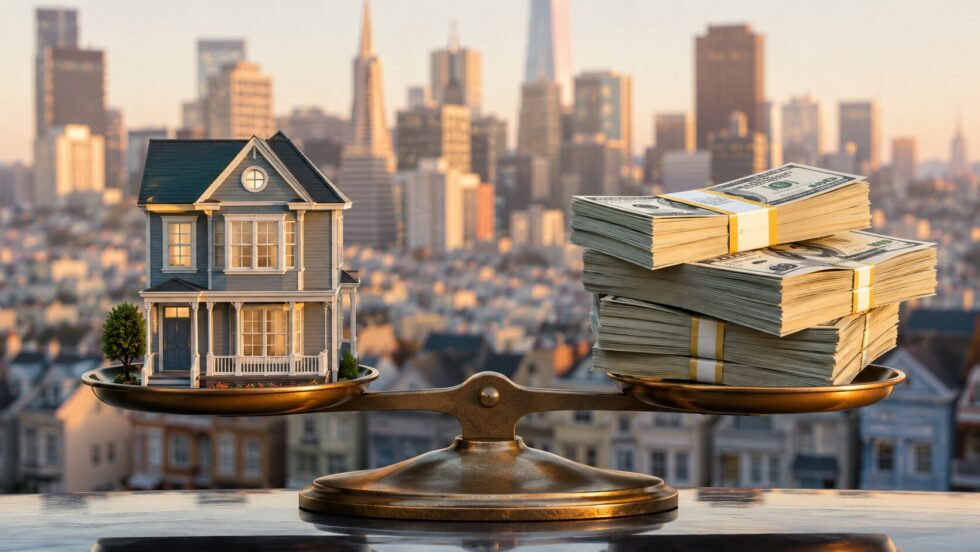
San Francisco rent prices in June 2026 continue to rank among the highest in the United States as demand from technology, artificial intelligence and finance workers pushes apartment competition back toward pre-pandemic extremes. Across multiple rental tracking platforms, the citywide average monthly apartment cost now ranges between roughly $3,700 and $4,050 depending on unit type, lease structure and neighborhood inventory, with eastern districts such as SoMa, Mission Bay and Dogpatch seeing some of the sharpest annual increases. In several ZIP codes connected to AI offices and startup expansion, year-over-year rent growth has crossed 20%, while tenants increasingly report bidding wars, crowded open houses and same-week lease signings, San Francisco Newsroom reports. The market shift is especially visible in luxury towers near downtown transit corridors, where corporate hiring and return-to-office policies have accelerated leasing activity.
The June 2026 rental market also reflects a widening divide inside San Francisco itself. While neighborhoods like Mission Bay, South Beach and Russian Hill continue moving upward due to high-income demand and limited inventory, several southern districts tied to older housing stock or university-related demand remain more price-sensitive. Data from recent Bay Area market reports shows that average asking rents across San Francisco rose between 14% and 15% year over year, though the increases are uneven depending on building age, transit access and proximity to major employers. Areas near the city’s eastern waterfront have become some of the most competitive residential zones in California, while outer western neighborhoods continue attracting tenants searching for relatively lower prices and larger living spaces.
San Francisco neighborhoods with the highest rent prices in June 2026
San Francisco’s most expensive neighborhoods in June 2026 remain concentrated around the northern waterfront, eastern tech corridor and premium central districts. Areas including Presidio, Mission Bay, South Beach and Russian Hill are consistently recording apartment averages well above the city median, particularly for one-bedroom units in newer developments. Analysts tracking Bay Area leasing activity say that corporate relocation activity linked to AI and software hiring has intensified pressure in districts with fast transit access to downtown offices and startup campuses.
At the same time, neighborhood pricing differences remain substantial. A tenant searching in Outer Richmond or Sunset may still find units several thousand dollars cheaper annually compared with South Beach or Dogpatch. However, lower-cost inventory is shrinking quickly as renters increasingly expand searches beyond traditional luxury districts.
According to recent rental data, eastern San Francisco ZIP codes have experienced some of the largest increases in the entire Bay Area housing market during spring 2026. SoMa and adjacent areas have become central to this trend because of proximity to tech employers, new office conversions and corporate expansion connected to artificial intelligence investment.
Average rent by neighborhood — June 2026
| Neighborhood | Average Monthly Rent | Market Trend 2026 |
|---|---|---|
| Mission Bay | ~$4,800 | Strong growth |
| South Beach | ~$4,819 | Luxury demand rising |
| Russian Hill | ~$4,629 | Stable high demand |
| Potrero Hill | ~$4,591 | AI-driven growth |
| Nob Hill | ~$4,493 | Increased competition |
| Hayes Valley | ~$4,234 | Strong leasing activity |
| SoMa | ~$3,800–$4,000 | Rapid rent acceleration |
| Mission District | ~$3,200–$3,900 | Competitive market |
| Sunset District | ~$2,900–$3,400 | More affordable |
| Outer Richmond | ~$3,150 | Moderate demand |
The difference between neighborhoods is no longer defined only by prestige or views. In 2026, renters increasingly prioritize commute time, access to hybrid work offices, public transit and newer building amenities. Leasing agents across the city report that buildings with coworking lounges, package rooms and gym access are leasing faster than comparable older units.
Why SoMa, Mission Bay and Dogpatch are seeing the biggest rent jumps
The strongest rent acceleration in San Francisco during 2026 is concentrated around eastern neighborhoods linked to the city’s technology recovery and AI expansion. Districts including SoMa, Mission Bay, Potrero Hill and Dogpatch have become central hubs for startup offices, venture-backed firms and flexible workspace development. According to recent reporting, ZIP code 94107 — covering SoMa, Potrero Hill and Dogpatch — recorded one of the steepest annual increases in the city, with rents rising approximately 26% year over year.
Several structural factors are driving this movement. First, office attendance has partially rebounded among technology companies that previously operated remotely. Second, AI-related investment activity has created new waves of highly paid workers relocating into central San Francisco. Third, construction pipelines remain constrained due to financing costs, zoning limitations and slower multifamily development approvals.
The result is a market where supply remains tight precisely in neighborhoods where demand is strongest. Leasing managers now regularly report apartments receiving multiple applications within days, especially near Caltrain connections, waterfront developments and transit-oriented housing.
Factors pushing eastern San Francisco rents higher
- AI company hiring growth
- Return-to-office mandates
- Limited new apartment construction
- Venture capital expansion in downtown SF
- High demand for luxury amenities
- Strong interest from out-of-state renters
- Reduced vacancy rates in central districts
- Faster lease turnover cycles
One noticeable trend in 2026 is the return of premium pricing for newer towers built between 2015 and 2022. During the pandemic years, many of these buildings offered concessions and discounted leases. That phase has largely disappeared in prime locations. Free rent promotions and move-in incentives have become less common compared with 2023 and 2024.
Which San Francisco areas remain relatively affordable in 2026
Despite the citywide increase, several San Francisco neighborhoods remain comparatively more affordable for renters seeking larger units or lower monthly payments. Outer Sunset, Outer Richmond, Bayview and parts of Visitacion Valley continue offering lower averages than downtown luxury districts, though affordability in San Francisco remains relative rather than absolute.
Housing analysts note that western neighborhoods have benefited from tenants prioritizing space, quieter streets and distance from downtown congestion. These districts also continue attracting families and long-term renters rather than short-cycle luxury leasing activity.
A separate trend is unfolding in Parkmerced and surrounding southern districts, where rental declines have been linked to property management issues, aging infrastructure and lower university-related demand. Reports from 2026 show that some Parkmerced rents fell between 4% and 10% year over year even while most of San Francisco experienced sharp increases.
Neighborhoods with relatively lower rent pressure
| Area | Typical Advantage |
|---|---|
| Outer Sunset | Larger apartments |
| Outer Richmond | More stable pricing |
| Bayview | Lower entry-level rents |
| Visitacion Valley | Less competition |
| Parkmerced | Promotional leasing |
| Ingleside | Transit-access value |
| Excelsior | Family-oriented inventory |
These neighborhoods are increasingly attracting renters priced out of central San Francisco. Real estate brokers say many tenants who originally searched in Mission Bay or Hayes Valley are shifting westward after facing aggressive competition and rising application requirements.
One-bedroom apartment prices across San Francisco in June 2026
One-bedroom apartments remain the most competitive category in the San Francisco rental market because they serve both individual professionals and couples moving into the city. Across major rental platforms, average one-bedroom prices now commonly range between approximately $3,300 and $4,200 citywide, depending on neighborhood and building type.
In some districts, however, the numbers are significantly higher. Premium one-bedroom units in Marina, South Beach and newer Mission Bay developments regularly exceed $5,000 per month. Meanwhile, smaller rent-controlled units in older buildings can still offer comparatively lower prices, though availability remains limited.
One-bedroom apartment estimates by area
| Neighborhood | Typical 1BR Price |
|---|---|
| Mission Bay | $4,800–$5,400 |
| SoMa | $4,000–$4,700 |
| Nob Hill | $3,800–$4,600 |
| Hayes Valley | $3,900–$4,500 |
| Mission District | $3,500–$4,200 |
| Sunset | $2,900–$3,500 |
| Richmond | $3,000–$3,600 |
The pricing gap between luxury towers and older rent-controlled inventory has widened noticeably during 2026. Rent-controlled apartments remain highly sought after because annual legal increases in San Francisco are limited. The city’s allowable rent increase percentage effective from March 2026 is 1.6%, according to local housing regulations.
What renters are now prioritizing in San Francisco
Modern tenants in 2026 increasingly focus on practical apartment features rather than square footage alone. Leasing specialists report that remote work infrastructure and neighborhood convenience now influence pricing almost as much as location prestige.
Key priorities include:
- In-unit laundry
- Fast internet infrastructure
- Access to BART or Caltrain
- Secure package rooms
- Flexible coworking spaces
- Pet-friendly leases
- Walkability to restaurants and grocery stores
- Earthquake-retrofitted buildings
This shift is especially visible among younger technology employees relocating from Seattle, Austin and New York.
What economists and housing analysts are saying about the 2026 market
Housing economists tracking the Bay Area rental sector increasingly describe San Francisco’s 2026 recovery as demand-driven rather than construction-driven. Unlike previous expansion periods fueled by aggressive residential development, the current market rebound is occurring while apartment supply growth remains limited.
That imbalance is one reason why prices have accelerated so quickly during the first half of 2026. Analysts point to several overlapping pressures: AI hiring, high-income relocation, constrained multifamily financing and slow housing approvals.
One frequently discussed issue is whether San Francisco’s current rent surge could create another affordability crisis similar to the late 2010s. Although some districts still remain below pre-pandemic peaks, the broader trend suggests that competition is rapidly intensifying again.
“The market has tightened faster than many expected because demand returned before new supply arrived,” said a Bay Area housing analyst quoted in regional rental market reporting during spring 2026. “The eastern side of San Francisco is now behaving much more like a pre-2020 leasing market again.”
Key June 2026 San Francisco rental market indicators
| Indicator | Current Situation |
|---|---|
| Average citywide rent | ~$3,700–$4,050 |
| Year-over-year growth | ~14–15% |
| Strongest increases | SoMa / Dogpatch |
| Luxury leasing activity | Accelerating |
| Vacancy pressure | Declining |
| Rent-controlled demand | Extremely high |
| AI-sector impact | Significant |
The broader Bay Area housing environment also matters. Rising costs in Silicon Valley and parts of the Peninsula continue pushing some workers toward San Francisco despite already elevated rents. That migration pattern strengthens leasing demand inside the city itself.
How San Francisco compares with other major U.S. cities in 2026
San Francisco remains one of the most expensive rental markets in America in 2026 alongside New York and Boston. National rental comparison studies place the city near the top of average apartment costs, particularly for one-bedroom and two-bedroom units.
Compared with many Sun Belt cities that experienced post-pandemic apartment construction booms, San Francisco faces tighter supply conditions and more restrictive development pipelines. That difference is one reason why local rents have rebounded so sharply despite broader national moderation in some regions.
Major U.S. city rent comparison — 2026
| City | Approximate Average Rent |
|---|---|
| San Francisco | $3,800–$4,000 |
| New York | $3,700+ |
| Boston | $3,500+ |
| San Jose | ~$3,100 |
| Los Angeles | ~$2,700 |
| Seattle | ~$2,400 |
| Austin | ~$1,900 |
Which San Francisco neighborhoods are becoming hardest for middle-income renters
San Francisco’s June 2026 rent surge is no longer affecting only luxury tenants or high-income technology workers. Analysts increasingly warn that middle-income renters — especially teachers, healthcare workers, university staff and media professionals — are being squeezed out of several districts that were previously considered attainable. Areas including Hayes Valley, Mission District, Lower Haight and Noe Valley are now seeing faster lease turnover and rising screening requirements as landlords respond to stronger demand and shrinking vacancy. Market reports show that the pressure is particularly severe for renters searching for one-bedroom units below $3,500, a segment that is disappearing rapidly in central San Francisco.
The problem is not simply price growth itself, but the speed of change. In many eastern and central districts, rents are increasing faster than wages outside the technology sector. Leasing agents now frequently require higher credit scores, stronger income verification and larger upfront deposits than in previous years. Several renters interviewed by local outlets described losing apartments within days after listings appeared online because competing applicants offered above-asking rent or longer lease commitments.
Housing economists also point to a structural issue that has returned to San Francisco after the pandemic slowdown: inventory scarcity. The city’s geography limits expansion, while multifamily construction pipelines remain slower than demand growth. AI hiring has intensified this imbalance by concentrating new wealth into relatively small geographic areas close to office clusters.
Neighborhoods where affordability pressure accelerated most in 2026
| Neighborhood | Key Pressure Factor | Typical Market Shift |
|---|---|---|
| Hayes Valley | AI office proximity | Faster lease bidding |
| Mission District | Startup migration | Smaller vacancy pool |
| Noe Valley | Family demand | Rising two-bedroom rents |
| Lower Haight | Hybrid workers | Reduced availability |
| Dogpatch | Luxury development | Premium pricing |
| Marina District | High-income relocation | Rapid one-bedroom growth |
One emerging pattern during spring 2026 is that renters are increasingly sharing apartments later into adulthood. Housing data and interviews with tenants show that many professionals earning solid salaries are still choosing roommates because single-unit affordability has deteriorated so quickly.
How AI companies are reshaping San Francisco’s rental geography
The AI expansion is changing not only prices but also the geographic logic of San Francisco housing demand. During earlier technology booms, the Financial District and South of Market dominated office concentration. In 2026, however, newer AI firms are increasingly spreading into smaller creative districts, warehouse conversions and mixed-use neighborhoods. This movement is influencing where employees choose to rent and which neighborhoods experience the strongest pricing pressure.
Mission, Design District, Hayes Valley and Potrero Hill have all become more attractive to startup employees because companies increasingly value shorter commutes and walkable urban environments. Unlike the remote-work phase of 2021–2023, many AI startups are strongly emphasizing in-person collaboration, creating renewed interest in neighborhoods close to office hubs.
This transformation is also affecting local business ecosystems. Restaurants, coffee shops and gyms near AI-heavy districts report increased activity compared with previous years. Real estate analysts describe this as a “micro-cluster” effect where startup concentration begins reshaping surrounding residential patterns.
Why certain districts are outperforming others
Several neighborhoods now benefit from overlapping advantages:
- Walkable office access
- Strong public transit connections
- Modern apartment inventory
- Mixed-use zoning
- Waterfront development
- Startup coworking spaces
- Higher restaurant density
- Luxury fitness infrastructure
At the same time, some traditionally prestigious neighborhoods are not growing as aggressively because they are farther from emerging technology corridors. That has slightly shifted the balance of demand toward eastern San Francisco.
Rent-controlled apartments are becoming even more competitive
One of the most important dynamics in the June 2026 market is the growing scramble for rent-controlled apartments. As asking rents rise rapidly in newer buildings, tenants are increasingly prioritizing older units protected by San Francisco rent stabilization rules. This has intensified competition in neighborhoods with large stocks of pre-1979 buildings, particularly in the Mission, Nob Hill and Richmond districts.
The legal annual increase cap for many regulated units remains comparatively modest compared with open-market rent growth. That gap has created a two-tier market where stabilized apartments can become dramatically cheaper over time than equivalent market-rate units nearby.
Real estate professionals say many tenants now remain in apartments longer than before because moving within San Francisco often results in enormous monthly cost increases. Turnover has slowed particularly among long-term renters in rent-controlled units.
Differences between rent-controlled and market-rate housing
| Feature | Rent-Controlled Units | Market-Rate Units |
|---|---|---|
| Annual increase limits | Yes | No |
| Typical building age | Older | Newer |
| Competition level | Extremely high | High |
| Luxury amenities | Usually fewer | More extensive |
| Lease pricing volatility | Lower | Higher |
| Tenant turnover | Lower | Faster |
This divide is reshaping tenant strategies. Many renters now prioritize lease stability over apartment size or newer amenities because long-term affordability has become increasingly uncertain.
What renters moving to San Francisco in summer 2026 should know
For new arrivals entering the San Francisco market during summer 2026, timing and preparation are becoming critical. Leasing specialists across the city increasingly recommend approaching apartment searches almost like job applications: with complete documentation, immediate responsiveness and financial verification ready before touring units.
Several trends define the current market:
What landlords now commonly request
- Proof of income at 2.5–3x monthly rent
- Credit scores above 700
- Recent pay stubs
- Employment confirmation letters
- Previous landlord references
- Fast application turnaround
- Security deposits within 24–48 hours
According to tenant reports and housing agents, apartments in desirable districts can disappear within three days of listing.
Another notable trend in 2026 is the rise of “flex geography” renters — people willing to live farther west or south while commuting selectively into AI office hubs several days per week. This partially explains why Sunset and Richmond remain comparatively competitive despite distance from downtown.
Areas renters increasingly consider for value
| Neighborhood | Why renters move there |
|---|---|
| Outer Sunset | More space |
| Inner Richmond | Transit + quieter streets |
| Ingleside | Lower entry rents |
| Daly City | Slightly lower pricing |
| South San Francisco | Better commuter balance |
| Bayview | Relative affordability |
Some tenants are also moving beyond San Francisco entirely while maintaining hybrid schedules tied to city offices.
Can San Francisco rents keep rising through late 2026
A growing debate inside the Bay Area real estate industry is whether San Francisco’s rental rebound can continue at the current pace into late 2026 and early 2027. Some analysts believe the AI economy could continue driving elevated demand, particularly if venture funding and hiring remain strong. Others warn that affordability pressure may eventually push more residents toward Oakland, Daly City or Silicon Valley suburbs.
The city’s housing shortage remains central to nearly every forecast. Even supporters of San Francisco’s economic rebound acknowledge that new supply is arriving too slowly to fully absorb demand growth. Affordable housing expansion plans are now becoming a major political issue inside city government as officials attempt to balance development pressure with affordability concerns.
Economists tracking the market increasingly describe San Francisco as entering another “high-friction” housing phase — a period where economic growth returns faster than residential capacity. Similar conditions existed before the pandemic, though today’s AI-driven market is developing with different geographic patterns and different employer structures.
“The market tightened faster than expected because supply never caught up,” one Bay Area housing analyst noted during spring 2026 discussions about the city’s rental acceleration.
For now, June 2026 marks a clear turning point. San Francisco is once again operating as one of America’s most competitive urban rental markets, with eastern districts seeing particularly aggressive growth and middle-income affordability becoming an increasingly urgent issue. The city’s rental geography is changing block by block — and for many tenants, choosing the right neighborhood is no longer only about lifestyle, but long-term financial survival in one of the world’s most expensive housing ecosystems.
While some national markets are stabilizing after rapid post-pandemic growth, San Francisco is moving in the opposite direction. The city’s technology sector recovery and international investment activity continue pushing housing demand upward even as affordability concerns intensify.
For renters entering the market during June 2026, timing and flexibility increasingly matter. Leasing professionals recommend monitoring listings daily, preparing application documents in advance and expanding neighborhood searches beyond the most competitive central districts.
San Francisco’s housing market has always reflected broader economic shifts, but 2026 marks a particularly sharp transition. The city is no longer in the discounted post-pandemic phase that temporarily eased pressure on renters. Instead, many neighborhoods are now experiencing a return to aggressive competition, especially near technology corridors and transit-connected luxury developments. For tenants, the difference between neighborhoods can now mean thousands of dollars annually — and in some districts, the gap between signing quickly and waiting another month may already be growing wider.
San Francisco News keeps the city, the Bay Area and the wider world informed with clear, useful reporting on what matters: Bay to Breakers 2026 San Francisco Route Map Street Closures Start Time Costumes Embarcadero